
Blog
Beginner Coding Courses for Kids
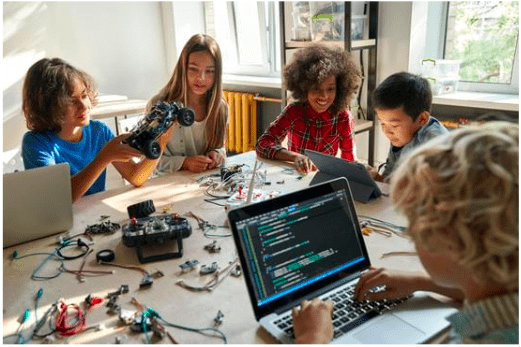
From the early age, children’s interaction with technology in the form of coding inspires creativity, development of logics, and problem solving skills. In this reason, numerous coding courses available are designed especially for kids and parents can select from them. To this effect, this article will look into ways children can benefit from coding and review the top basic coding courses.
Why Teach Kids to Code?
Enhances Problem-Solving Skills: Therefore, coding helps the young learners to identify the necessary tasks, and then divide them into as many smaller parts for which they can find the required logical solutions. This analytical thinking, I have to stress, is helpful not only when writing the code but in people’s everyday life.
Boosts Creativity: Through programming, children are able to try to work out their enlightened pictures in their little minds, on how they want a game, application or site to be like. That they found it to be useful and a very efficient and powerful instrument for communicating with the world at large as well as to express one’s personality.
Improves Academic Performance: It has been found that formal coded language does enhance mathematics and reading. It also shows how algorithms and syntax can improve their knowledge of mathematics knowledge as well as when doing reading and writing codes this insurenthelps develop ones language skills.
Prepares for the Future: To the present generation the advancement of technology has gone higher that coding is being imbedded in most careers. Learning of coding at an early age will enable children to stand a better chance in the job market.

Top Beginner Coding Courses for Kids
Scratch by MIT
Age Range: 8-16
Platform: Web-based
Description: Scratch is an open source project where kids can learn How to use computers and create their own stories and animations with ease. The used color coded blocks make it easy for the kids to drag and drop the code blocks to make the programs. Unlike most programs that introduce the individual to complicated programming languages, Scratch enables the appreciation of basic aspects of programming.
Pros: Free, user-friendly, large community support, extensive resources and tutorials.
Cons: Limited to visual programming, not suitable for advanced coding.
2. Code.org
Age Range: 4-18
Platform: Web-based
Description: Code. org provides a range of coding courses with references to a target audience that include learners of different ages. I conclude their Hour of Code initiative offers one-hour tutorials in more than 45 languages. It is made easy to learn with courses having themes from some of our favorite movies and games such as Minecraft and Star wars.
Pros: Free, structured curriculum, partnerships with schools, diverse course offerings.
Cons: Requires internet access, limited depth for older students.
3. Tynker
Age Range: 5-18
Platform: Web and mobile (iOS and Android)
Description: Tynker has all round coding solution for kids with various courses that it offers. The other is the approach where the child uses visual programming and as he or she grows, they graduate to using text-based programming. Some of the courses in Tynker are as follows: Making games, building apps, commanding drone and robots.
Pros: Age-appropriate curriculum, progression from visual to text coding, mobile-friendly.
Cons: Subscription-based, can be costly.
4. Kodable
Age Range: 4-10
Platform: Web and iOS
Description: Kodable teaches coding in an interesting manner through play, and play-based activities. It begins with ideas such as a program and variables with a visual interface then graduate to JavaScript. Kodable also provides teacher’s lesson plans as well as activities for students and parents to follow.
Pros: Game-based learning, progression to JavaScript, parent and teacher resources.
Cons: Limited to younger children, subscription required for full access.
5. Minecraft: Education Edition
Age Range: 6-18
Platform: Web and desktop (Windows and macOS)
Description: Education Edition utilizes Minecraft game where children are encouraged to learn code and other basics subjects. Some of the features which are available as an addition is the Code Builder which enables students to code the world of Minecraft. This edition also includes lesson plans as well as team projects.
Pros: Engaging and familiar platform, collaborative learning, supports multiple subjects.
Cons: Requires Minecraft subscription, can be distracting for some students.
6. Blockly Games
Age Range: 8-12
Platform: Web-based
Description: Blockly Games is a series of educational games that teach programming through puzzles and challenges. The visual block interface helps children learn programming concepts before transitioning to text-based languages.
Pros: Free, educational and fun, prepares for text-based coding.
Cons: Limited to basic concepts, not as comprehensive as other platforms.
7. Bitsbox
Age Range: 6-14
Platform: Web-based
Description: Bitsbox is an online-based business specializing in coded projects in a child-friendly subscription box format where the child gets a box every month. These projects involved basic teaching of children on how to construct apps with a form of something like JavaScript. Every box has its unique concept so that children do not get bored while continuing with their learning process.
Pros: Hands-on learning, new projects every month, focuses on real coding.
Cons: Subscription-based, limited to app development.
8. Swift Playgrounds
Age Range: 10+
Platform: iOS and macOS
Description: Introduced by Apple, Swift Playgrounds, is an application designed to teach its user Apple’s Swift programming language using specific puzzles and challenges. It is intended for using Swift for education to be entertaining in addition to being easy to understand by learners.
Pros: Free, professional-grade language, high-quality interface.
Cons: Limited to Apple devices, requires basic reading skills.