
Blog
Why Do Blood Types Matter in Biology?
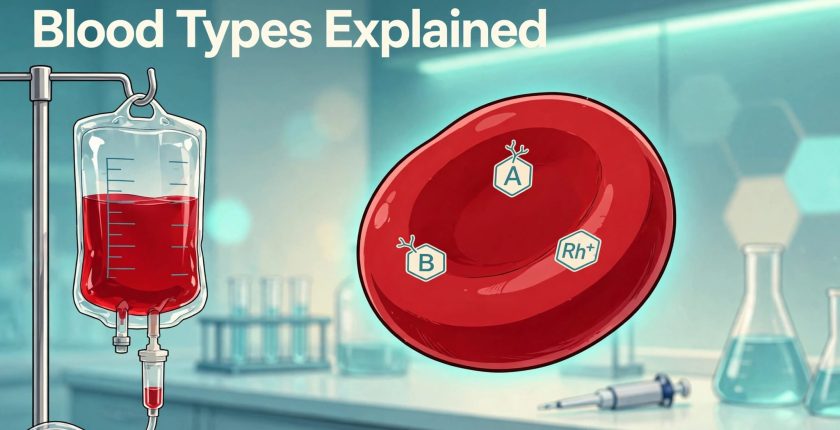
They matter because they help determine whether donated blood is compatible with your immune system. They also explain patterns of inheritance and some pregnancy complications, while giving scientists useful clues about human biology.
The key is immune recognition: molecules on red blood cells can trigger an attack when another person’s immune system identifies them as foreign. Understanding those molecules makes the familiar A, B, AB, O, positive, and negative labels much easier to follow.
Key Takeaways
- The eight main blood types combine an ABO group with a positive or negative Rh label.
- Red-cell transfusions and plasma transfusions follow different compatibility rules.
- Blood groups are inherited, but safe transfusions require laboratory testing, not a compatibility chart alone.
How ABO and Rh Define Eight Blood Types
Blood groups describe inherited differences on red blood cells. The ABO system and Rh system produce the eight blood types most people recognise.
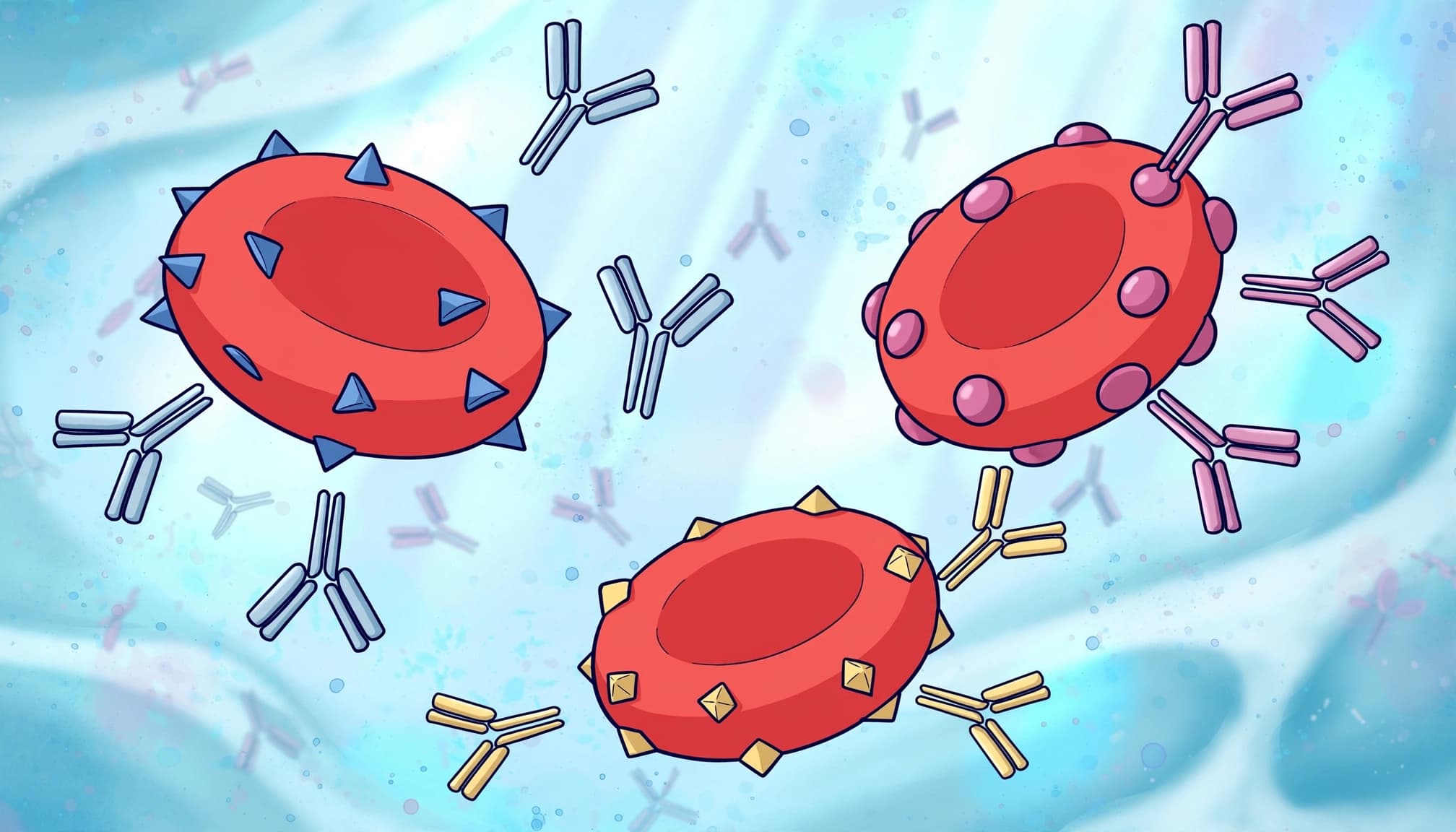
ABO Markers and Antibodies
Antibodies are proteins that recognise specific markers. In the ABO system, A and B antigens are sugar structures attached to molecules on cell surfaces.
Type A blood has A antigens on red cells and usually anti-B in plasma. Type B has B markers and anti-A.
Type AB has both antigens and usually neither anti-A nor anti-B. This doesn’t mean it lacks every antibody.
Type O has neither A nor B markers, but usually has anti-A and anti-B. These explain why a type O recipient can receive only type O red cells under standard ABO rules.
What Positive and Negative Mean
The positive or negative label usually refers to the D antigen, known as the Rh factor. Rh-positive cells carry it; Rh-negative cells don’t.
Combining these labels gives A+, A-, B+, B-, AB+, AB-, O+, and O-.
Unlike the usual ABO response, anti-D generally develops after exposure to cells that carry D, such as through pregnancy or transfusion. The Rh system also includes other markers beyond D.
Blood Type Compatibility in Transfusions
An incompatible blood transfusion can cause antibodies to bind donated red cells. The cells may clump and break apart, potentially causing kidney damage, shock, or death.
Standard Red-Cell Compatibility
This chart summarizes blood type compatibility for ABO and RhD red-cell transfusions.
| Recipient | Compatible red-cell donor types |
|---|---|
| O- | O- |
| O+ | O-, O+ |
| A- | O-, A- |
| A+ | O-, O+, A-, A+ |
| B- | O-, B- |
| B+ | O-, O+, B-, B+ |
| AB- | O-, A-, B-, AB- |
| AB+ | All eight types |
Matching the exact group is generally preferred. O negative is often called the universal donor for red-cell transfusions because its red cells lack A, B, and D antigens. Clinicians can use them for emergency transfusions before a patient’s type is known.
Rh-positive recipients may receive Rh-positive or Rh-negative red cells when the ABO group also matches. Other blood-group markers still matter. As Lifeblood explains in its blood-group matching guidance, laboratories test compatibility before transfusion.
Compatibility Rules for Other Components
Plasma contains antibodies rather than red cells with ABO markers. Its ABO compatibility pattern reverses.
AB plasma can be given to recipients of all ABO types because it lacks anti-A and anti-B. Meanwhile, AB-positive people are universal recipients for red cells, not every blood component.
“Universal donor” describes a particular blood component. It doesn’t remove the need for antibody screening and clinical judgement.
Emergency decisions can differ from routine practice. Professionals consider available supplies, existing antibodies, and the patient’s circumstances.
How Children Inherit Their Blood Type
Blood groups come from genes inherited from parents. However, a visible blood type doesn’t always reveal the exact genetic combination behind it.
A Worked ABO Example
The ABO gene is on chromosome 9. You inherit one ABO allele from each parent. A and B are codominant, meaning both appear together; O is usually recessive.
In standard classroom genetics, type A can be AA or AO, while type B can be BB or BO. AB has one A and one B allele; O usually has two O alleles.
If one parent is AO and the other BO, each pregnancy has these probabilities:
| Child’s genotype | Blood group | Probability |
|---|---|---|
| AB | AB | 25% |
| AO | A | 25% |
| BO | B | 25% |
| OO | O | 25% |
These probabilities apply independently to each pregnancy. Four children aren’t guaranteed to include one of each group.
Adding Rh Inheritance
The RHD gene on chromosome 1 largely determines whether the D antigen, part of the Rh factor, is present. Rh genetics is more complex than a simple dominant-recessive diagram, but that model helps beginners.
Using classroom notation, an Rh-positive parent with Dd has a 50% chance of passing on the D allele. With a dd parent, the child has a 50% chance of being Rh-positive under this simplified model.
Combining AO/Dd with BO/dd produces eight possible ABO/Rh labels, each with a 12.5% probability under this simplified model. Different parental genotypes produce different probabilities.
Why Rh Factor Matters During Pregnancy
An Rh-negative pregnant person carrying an Rh-positive baby can develop anti-D antibodies if fetal red cells enter their bloodstream. Exposure often happens around delivery, but it can happen earlier.
Once formed, anti-D can cross the placenta in a later pregnancy and destroy an Rh-positive baby’s red cells. This can cause anaemia and haemolytic disease of the fetus and newborn, sometimes affecting an already sensitised person’s current pregnancy.
Anti-D immunoglobulin helps prevent sensitisation in people who haven’t already developed anti-D antibodies. Clinicians give it during pregnancy and after relevant exposures, including within 72 hours after an Rh-positive birth.
Postnatal treatment primarily protects future pregnancies; it doesn’t reverse established sensitisation. The NHS explains how rhesus-related disease is assessed and why people who have already developed anti-D antibodies need different monitoring.
An Rh difference doesn’t automatically mean the baby will become ill. Antenatal blood typing and antibody screening identify pregnancies needing prevention or closer care.
Which Blood Types Are Common or Rare?
Blood-group frequencies differ between populations. Therefore, a percentage needs a location and source, rather than a worldwide interpretation.
Better Health Channel publishes these Lifeblood-attributed Australian frequencies:
| ABO group | Positive | Negative |
|---|---|---|
| O | 40% | 9% |
| A | 31% | 7% |
| B | 8% | 2% |
| AB | 2% | 1% |
In this distribution, O-positive is common, while AB-negative is the rarest of the eight main types.
Moffitt Cancer Center cites about 7% for O-negative, compared with 9% in these Australian figures. Those numbers shouldn’t be treated as competing universal measurements. Geography, population ancestry, sampling, and publication date can change reported frequencies.
AB-negative also isn’t necessarily the rarest blood type when every blood-group system is considered. Extremely unusual combinations, including Rh-null, exist beyond the eight familiar labels.
Rh-null cells lack all Rh proteins, not merely the D protein. This distinction matters because someone with an unusual antibody may need a rare donor despite having an ordinary-looking ABO label.
What Blood Groups Teach Us About Biology
Blood groups connect genetics, cell chemistry, and immunity. ABO genes influence enzymes that build surface sugars, while Rh markers are proteins. Both show how inherited DNA differences become physical cell characteristics.
Researchers also investigate links between blood groups, infections, and clotting. These are population-level associations, not predictions of an individual’s health. Your type doesn’t determine your personality or establish a scientifically supported diet.
Karl Landsteiner received the 1930 Nobel Prize in Physiology or Medicine for discovering human blood groups. His work helped explain why some transfusions succeeded while others caused dangerous reactions.
Bone marrow transplantation offers another biological lesson. After a successful donor stem-cell or bone-marrow transplant, newly produced blood cells can acquire the donor’s blood type over time.
The recipient’s other tissues retain their original genetic identity. This shows that blood type reflects the cells making the blood, rather than an unchangeable label shared identically by every tissue.
Blood Donation and Finding Your Type
A laboratory blood test can identify your ABO and Rh group. Blood services also test every donation for blood type and specified infectious diseases, and donors can learn their group after donating.
Hospitals rely on blood donation because there is no widely available artificial replacement for every function needed in a blood transfusion. Red cells carry oxygen, while platelets support clotting and other components replace lost fluid.
One whole-blood donation can help up to three patients when separated into components. An often-cited US estimate says about one in seven hospital patients needs blood, although that figure isn’t a universal rate for every hospital.
All groups matter because patients need different components and antigen matches. The American Red Cross’s overview of blood types explains why donation needs extend beyond O-negative.
Knowing your group is useful, but a remembered result or donor card never replaces hospital testing.
Find your tutor here for one-to-one support with genetics and biology questions.
If you choose to purchase a product or service through one of these links, we may receive a commission at no additional cost to you. Any recommendations are provided for informational purposes only.