
Blog
Exam Time Management: Plan Every Mark Before You Write
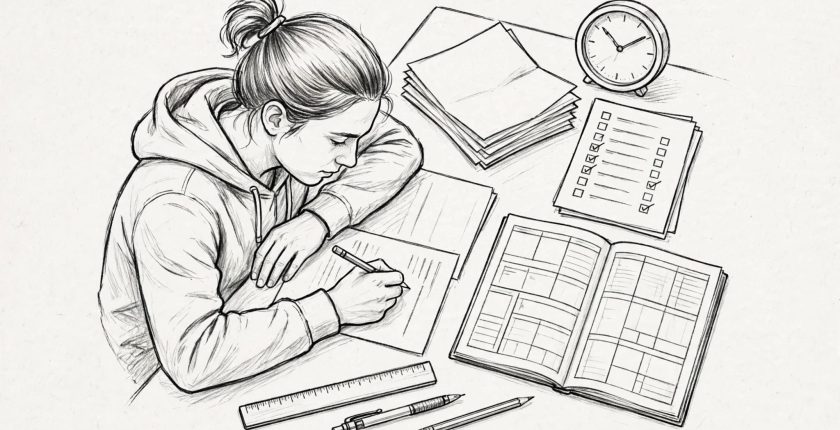
A timed written exam can feel rushed long before the clock becomes a problem. Exam time management gives you a practical way to decide what deserves your attention, when to move on, and how to leave enough time to check your work.
The aim isn’t to write as fast as possible. It’s to spend your minutes where marks are available, follow the paper’s instructions, and put an answer beside every question when the format allows it.
Start by mapping the paper and its instructions
The first few minutes can prevent avoidable losses later. Before writing full answers, check the front page for the total time, number of sections, choice rules, permitted equipment, and any special answer format.
A paper may tell you to answer one question from a choice of two, use a formula booklet, round answers to a stated number of decimal places, or write in a separate booklet. Those details affect both your time plan and the marks you can earn.
Read command words before choosing your approach
Command words tell you how much depth a response needs. “State” often needs a brief fact. “Describe” asks for relevant features. “Explain” needs a reason or process, while “Evaluate” usually needs evidence, judgement, and balance.
A correct fact can earn little if it doesn’t meet the command word. Underline instructions such as “give two reasons,” “show all working,” or “refer to the source.” Then check whether each answer has met every part.
Make a quick question map
Scan the paper and mark the value of each question. Notice which questions are compulsory, which offer choices, and which need planning time.
Don’t begin with the question that looks hardest unless the exam structure demands it. A quick overview helps you spot high-mark tasks and prevents an early problem from taking time meant for the rest of the paper.
A question’s length doesn’t always match its value. A short source-based prompt can require close reading, while a long-looking calculation may carry only a few marks.
Calculate exam time management per mark
The most useful starting calculation is simple:
Available writing time divided by total marks = approximate minutes per mark.
First, remove time for reading and reviewing. Then divide the remaining minutes by the marks available. Use the result as a guide rather than a rigid rule, because some questions require setup time and others can be answered quickly.
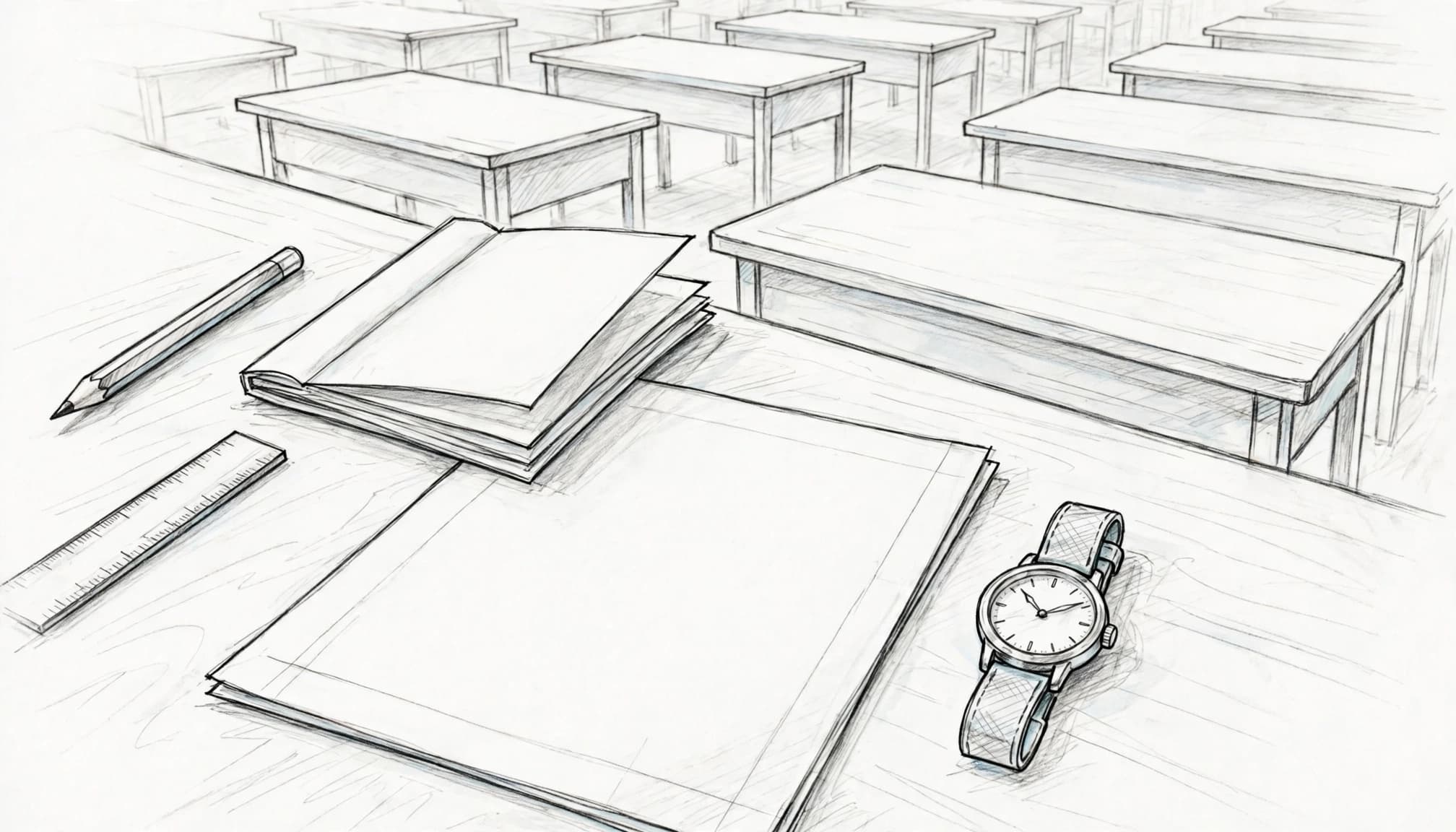
For example, imagine a 90-minute paper worth 60 marks. You might reserve 8 minutes to read and plan, plus 7 minutes to review. That leaves 75 minutes for answers.
| Part of the exam | Minutes | Why it matters |
|---|---|---|
| Read instructions and scan questions | 8 | Confirms choices, command words, and paper structure |
| Answer 60 marks | 75 | Gives about 1.25 minutes per mark |
| Review answers | 7 | Catches omissions, units, and rushed errors |
In this example, a 10-mark response has a rough budget of 12 to 13 minutes. A two-mark question should usually take about two to three minutes, unless it involves a calculation with several steps.
Write target times beside larger questions
Convert your allocation into clock times before you get absorbed in the paper. If the exam begins at 9:00 and your 10-mark answer should end by 9:28, write “9:28” beside it.
Target times are easier to follow than repeatedly doing mental arithmetic. If you finish early, use the spare minutes to improve an answer or begin the next question. If you reach the target time without finishing, leave space and move on.
Keep a small buffer for uneven questions
Time per mark isn’t perfect. An essay may need a three-minute plan before you write a sentence. A multi-step science question may require checking a graph, selecting an equation, and showing working.
Give larger or unfamiliar questions a modest buffer. However, don’t take that buffer from your final review. A last check often saves marks through corrected arithmetic, missing labels, or an unanswered sub-question.
Adjust your plan for different written question types
Different formats demand different pacing. Use the mark value as your anchor, then account for the kind of thinking and writing the question requires.
Handle multiple choice and short answers briskly
Read the stem before the options. Cross out answers that clearly conflict with the question, then compare the remaining choices against the exact wording.
The process of elimination reduces guesswork, especially when one option is too broad, reverses a key term, or ignores a condition in the stem. If a question still holds you up, mark it lightly and return later. Don’t leave a blank unless the exam has a penalty for guessing.
Definitions and one-mark responses need precision, not paragraphs. Write the requested term, unit, date, or fact. Extra writing can introduce contradictions and waste time.
Protect method marks in calculations
For maths, science, accounting, and economics papers, show the meaningful stages of your method. A wrong final number may still receive credit when your setup and calculation steps are correct.
Start by identifying what the question gives you and what it asks for. Write the formula or method, substitute values carefully, and include units where required. Check calculator mode if trigonometry or statistics are involved.
When stuck, write the relevant equation or first step before moving on. That partial attempt may earn a method mark and gives you a clear place to restart during review.
Plan extended responses before drafting
Essay questions and long explanations need a short plan. List your main points, evidence, examples, or calculation stages in the margin. Then give each paragraph a job that matches the marks available.
A 12-mark history response rarely needs an introduction that consumes four minutes. In literature, a paragraph should make a point, use relevant evidence, and explain how that evidence supports the argument. For a “compare” question, keep both sides present rather than writing two disconnected mini-essays.
Use your time budget to limit detail. If a six-mark explanation needs three linked points, cover those points clearly before polishing style.
Use checkpoints without watching the clock constantly
Checking the time every minute can increase anxiety and interrupt your concentration. Instead, set a few planned checkpoints based on the paper’s structure.
Choose an order that protects accessible marks
Start with questions you can answer confidently when the paper allows any order. Early marks build momentum and reduce the risk of leaving straightforward work untouched.
Still, don’t postpone every difficult question until the final minutes. After completing a group of accessible questions, attempt the harder ones while you still have thinking time. Keep a visible mark beside anything you plan to revisit.
Compare progress with marks, not page count
A full page of handwriting might earn fewer marks than a short calculation. At each checkpoint, compare the marks completed with the time elapsed.
If roughly half the writing time has passed, you should usually have attempted close to half the available marks. This check is more useful than judging progress by how much paper you have filled.
Recover quickly when you fall behind
Falling behind doesn’t mean the paper is lost. The worst response is often to keep overworking the same question because you feel invested in it. A calm reset can recover marks across the remaining pages.
Stop, recalculate, and reduce detail
At the next natural pause, take 20 seconds to find your position. Count the marks still unanswered and divide the remaining writing time across them. Reserve at least a brief final check if possible.
Next, shorten your approach. For extended answers, write the strongest points first and cut decorative introductions. For calculations, show the method and move forward. For short responses, give the direct answer rather than explaining beyond the mark value.
Leave useful partial answers
Write something relevant before moving on. A formula, a labelled diagram, a thesis statement, a key definition, or a brief point can earn credit where the marking rules allow it.
Use this recovery sequence:
- Circle the question number and leave a clear gap.
- Add the first valid step or idea you can produce.
- Move to the next available marks.
- Return only if time remains after every question has an attempt.
Acute stress can narrow attention, which makes a difficult question seem more important than it is. Slow your breathing once, look at the mark values, and let the allocation guide your next decision.
Build pacing through realistic timed practice
A good time plan comes from evidence, not a guess made the night before. Practice papers show whether you read slowly, write overlong answers, struggle with recall, or misinterpret questions.
Recreate the exam conditions
Use past papers from the correct course, exam board, or instructor when possible. Set the official time limit, clear unrelated notes away, silence notifications, and use only permitted equipment.
Complete the paper without checking answers as you go. If you give yourself extra minutes, you won’t learn whether your plan works under real conditions. Put your pen down when the timer ends, then mark the script afterward.
Record where your minutes go
Write the start and finish time beside larger questions during practice. When you review the paper, compare time spent with marks earned.
A slow answer may reveal a knowledge gap, weak recall, a misunderstood command word, or an overlong writing style. Keep a brief mistake log with the question, cause, correction, and one action for next time.
The Pomodoro technique can help during revision. Try 25 minutes of focused active recall or exam-style questions, followed by a five-minute break. After several cycles, take a longer break. Use one session to attempt questions and another to check, correct, and retest weak areas.
Key takeaways for timed written exams
- Reserve time to read instructions and review your work before calculating writing time per mark.
- Use mark values and target clock times to decide when to move on.
- Match your pace to the task, with brief answers for low-mark prompts and planning time for extended writing.
- Attempt every required question where possible, even if you can only leave a relevant first step.
- Practise with realistic time limits, then use your timing notes and mark scheme to improve the next paper.
Frequently asked questions about exam timing
Should you answer easy questions first?
Usually, yes, if the exam allows you to choose your order. Quick, confident answers secure accessible marks and settle early nerves. However, return to demanding high-mark questions before the final stretch, because they need thinking time and planning.
What should you do if time is almost over?
Scan for blanks first. Add direct answers, key terms, formulas, labels, or brief points wherever they could earn marks. Then check that you answered the required number of questions and followed choices or section instructions. Don’t spend your final minute perfecting one response while another remains empty.
How much time should you save for checking?
Five to ten minutes works for many papers, but the right amount depends on the total time and format. Calculation-heavy papers need checks for signs, units, and arithmetic. Essays need checks for missing parts, question focus, and clear paragraph structure. In a short test, even two focused minutes can help.
Make the clock work for your answers
Strong exam time management is a repeatable habit: read carefully, allocate by marks, check progress, and move on when a question takes more than it gives back.
A flexible plan protects the whole paper, not only the questions you enjoy. When you practise that plan under timed conditions, the clock becomes a guide instead of a threat.