
Blog
How to Take Class Notes That Make Exam Revision Easier
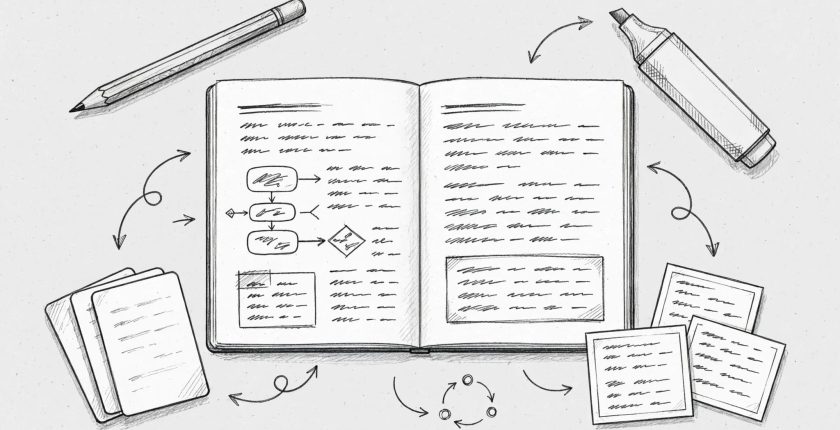
Good notes don’t need to record every sentence your teacher says. They need to help you understand an idea now and retrieve it when an exam question appears months later.
Useful class notes capture the main point, show how ideas connect, and leave you with prompts to answer later. Once you stop treating note-taking as transcription, revision becomes far less overwhelming.
Key Takeaways
- Write ideas in your own words whenever possible, because processing information helps you spot what you understand and what needs work.
- Use headings, short summaries, questions, and diagrams to give each page a clear structure.
- Pick handwritten or digital notes based on what helps you focus, organise material, and revise consistently.
- Turn notes into flashcards, practice questions, essay plans, and worked examples soon after class.
- Test yourself without looking at the page, check mistakes carefully, and return to difficult material over several days.
Start With Understanding, Not a Perfect Record
Trying to copy every slide, definition, and spoken example usually leaves you with crowded pages and little memory of the lesson. Your attention is limited. If all of it goes into writing, there is less room to think.
Instead, listen for the lesson’s main argument, process, or problem. Then record the parts that explain it. A biology lesson on photosynthesis might need the equation, the role of chlorophyll, and the conditions that affect the rate. It doesn’t need every sentence used to introduce the topic.
Prepare a simple page before class
Date each page and add the lesson title before the teacher begins. Leave a margin for later questions and keep a few lines clear at the bottom for a summary.
If the teacher shares learning objectives, turn them into headings. For example, “How does natural selection work?” is more useful than a vague heading such as “Evolution notes.” Your revision material will later be easier to search and test.
Listen for signals that an idea matters
Teachers often flag examinable content with phrases such as “remember this,” “a common mistake is,” or “this explains why.” Write down those warnings, but also notice repeated ideas and worked examples.
When a point doesn’t make sense, mark it with a question mark rather than pausing to fix every gap. You can ask after class, check the textbook, or compare notes with a classmate. A visible gap is more useful than a neat page that hides confusion.
Notes should show your thinking, including the parts you need to revisit, rather than pretending every lesson was clear immediately.
Give Class Notes a Structure You Can Reuse
A consistent format reduces the effort of deciding where everything belongs. It also stops a page becoming a long, unbroken list of facts.
Choose one method for most subjects, then adjust it when the material calls for something different. You don’t have to use a complex template for every lesson.
Use the Cornell layout for questions and review
Divide the page into a wide note-taking area, a narrow left-hand column, and a short summary section at the bottom. During class, write the main ideas in the large area.
After class, use the left column for cue questions such as “What are the stages of mitosis?” or “Why did the policy fail?” Finish with a three- or four-sentence summary. When revision starts, cover the notes and answer the cues aloud or on paper.
Use outlines for ordered topics
An outline works well when a lesson has a clear sequence. History events, legal principles, scientific processes, and lecture arguments often fit this format.
Place the main idea on the left and indent supporting details beneath it. Keep each point short. If you can’t fit a detail into the hierarchy, ask whether it is evidence, an exception, or a new main point.
Use diagrams when relationships matter
Some topics are difficult to understand as sentences alone. Draw a labelled process for the water cycle, a food web, a timeline, a mind map, or arrows between cause and effect.
The drawing doesn’t need to look polished. It needs to show relationships accurately. A quick diagram of blood flow through the heart, drawn from memory later, can reveal more than rereading a full page of labels.
Choose Handwritten or Digital Notes Based on How You Learn
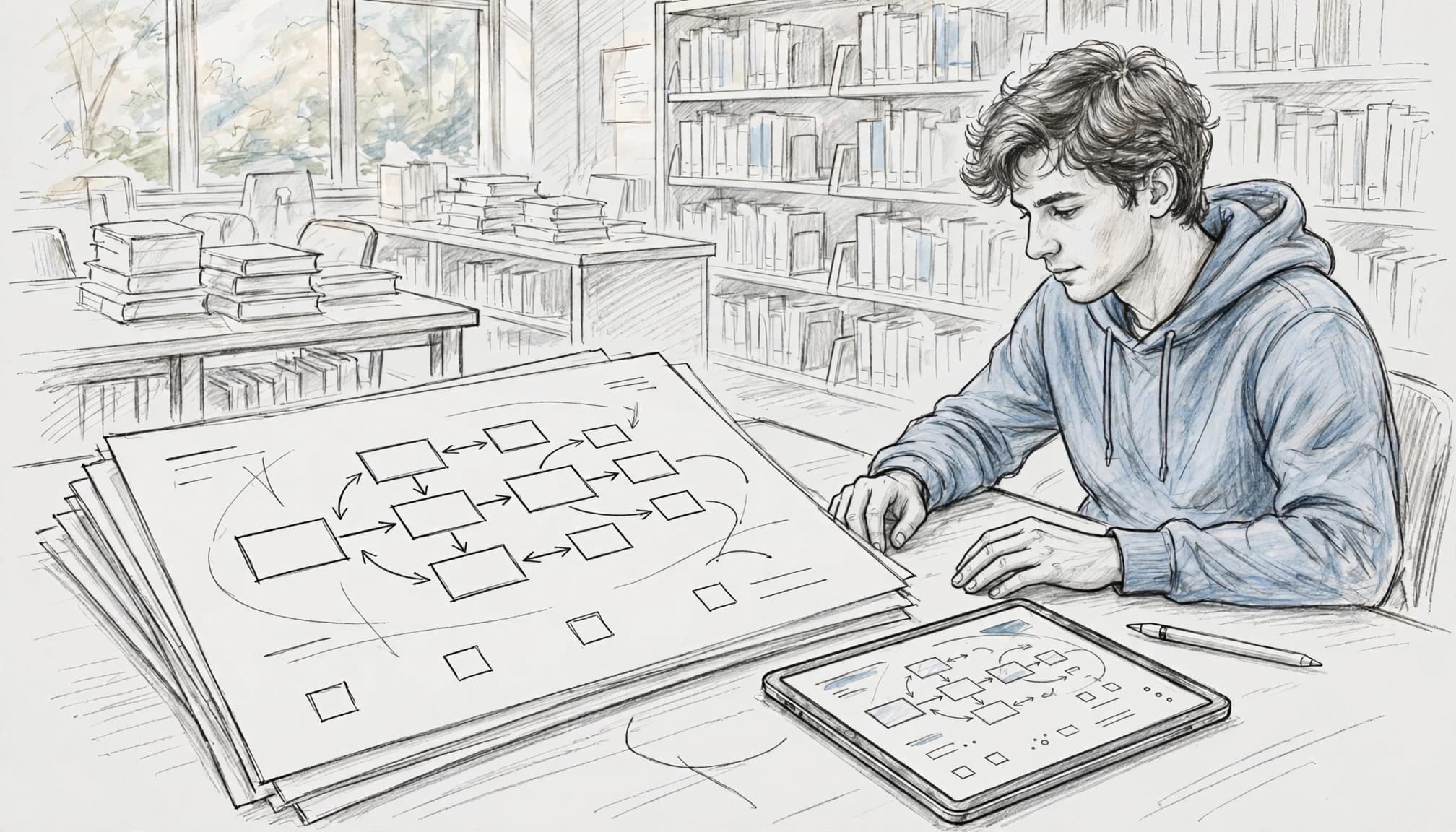
Handwritten notes can slow you down enough to make choices about what matters. Many students also find it easier to sketch diagrams, annotate equations, and see a whole topic spread across two pages.
Digital notes are useful when you need searchable course folders, quick edits, audio support, or access across devices. A tablet with a stylus can combine handwriting with slide annotation, while a laptop may suit fast-paced lectures.
Make your system easy to find later
Use one folder or notebook for each subject. Within it, organize course content by unit, week, or topic. Give files clear names, such as “Chemistry, acids and bases, week 4.”
A digital notebook such as OneNote can hold typed notes, handwriting, images, and annotated handouts in one class notebook. Notion can also work as a subject dashboard for assignments and due dates. Still, the tool matters less than reviewing what you put into it.
Avoid turning devices into distractions
Turn off notifications before class. Keep only the tabs, documents, or apps needed for the lesson open. If a device pulls you into messages or unrelated browsing, paper may be the better choice.
You can also mix formats. Take handwritten notes during class, then photograph or scan key pages into a digital notebook. The best system is the one you’ll keep using when deadlines build up.
Turn Notes Into Revision Materials Within a Day
Notes become more useful when you revisit them soon after class. Spend 10 to 15 minutes filling gaps, checking unclear terms, and reducing a page to its essential ideas.
Don’t rewrite every page neatly. That can feel productive while leaving you untested. Instead, convert your notes into materials that ask you to remember, explain, compare, or apply knowledge.
Write questions that demand an answer
Make each question focused enough to answer without guessing what it means. For factual content, ask “What is the function of the mitochondria?” For deeper learning, ask “Why does increasing temperature change enzyme activity?”
In maths, turn worked examples into prompts. Cover the solution and write, “Which method solves this type of simultaneous equation?” Then complete a similar problem without help. For literature, use questions that require evidence and an argument, not only quotation recall.
Build concise summaries and comparison pages
At the end of a topic, make a one-page summary using headings, key terms, diagrams, and only the evidence you need. This is a test of selection. If a detail cannot be explained or placed under a heading, return to the original notes before adding it.
Comparison pages work especially well for topics that students mix up. Contrast mitosis and meiosis, ionic and covalent bonding, or two historians’ interpretations. Put the differences beside each other, then cover one side and recreate it.
Use Active Recall Instead of Repeated Rereading
Rereading class notes has a place when a topic is new. However, familiar-looking pages can create the feeling that you know more than you can produce in an exam.
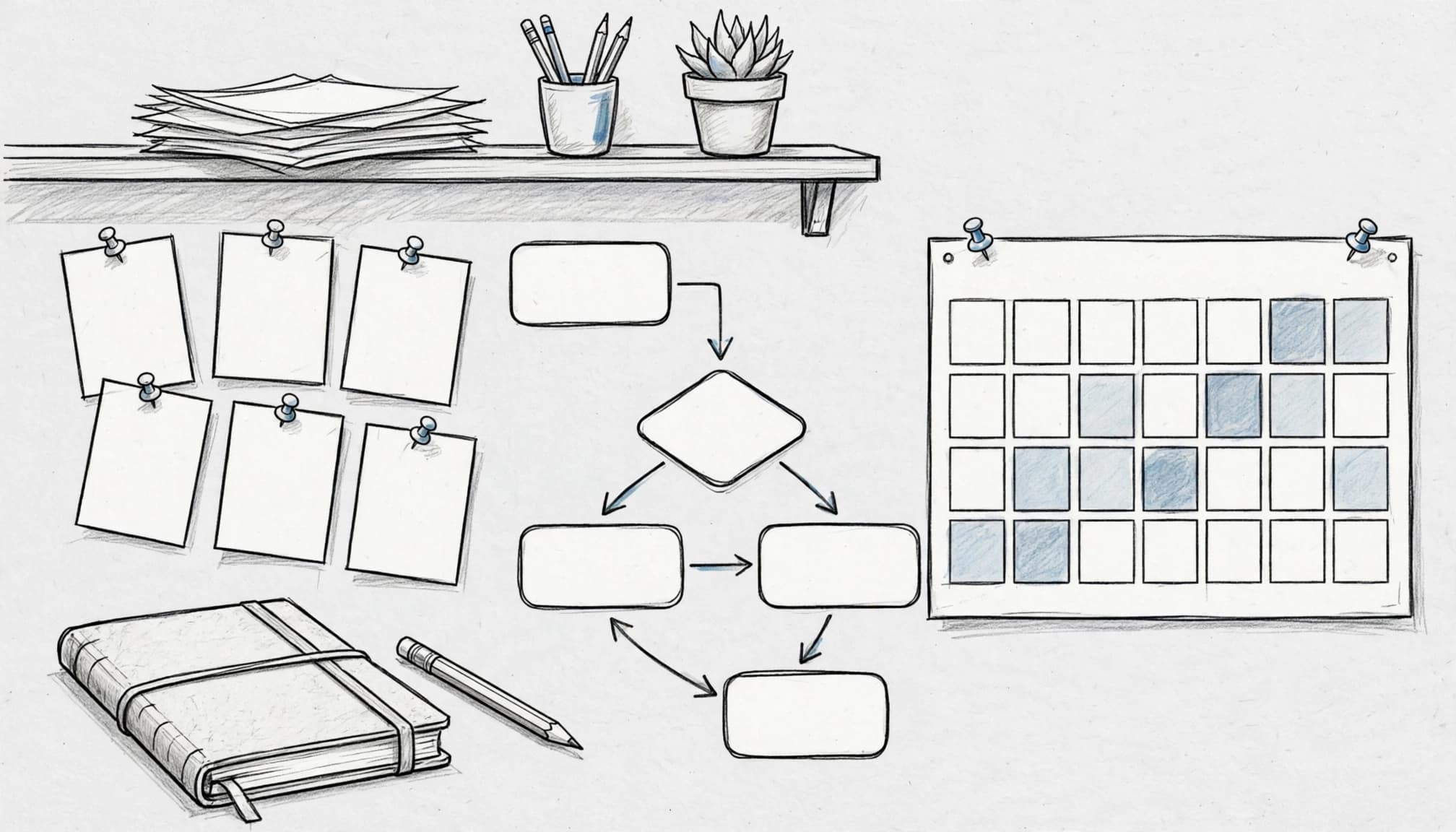
Active recall means attempting an answer before checking the notes. It can involve flashcards, blurting everything you remember onto a blank page, explaining a process aloud, or completing practice problems closed-book.
Follow the answer, check, correct, retest cycle
First, answer from memory. Next, compare your work with reliable notes, a textbook, a mark scheme, a worked solution, or teacher feedback.
Then write a short correction that explains the error. Perhaps you used the wrong formula, missed a condition, misunderstood a command word, or forgot evidence. Finally, return later and retest with a fresh question. Copying the right answer once does not prove you can retrieve it.
Space your reviews across the week
Cramming can help you finish an urgent task, but it gives you little practice recalling after time has passed. A practical starting pattern is to review a topic on day 0, then after one day, three days, seven days, and fourteen days.
Keep the sessions short and purposeful. A new topic might need 20 minutes of learning followed by 20 minutes of recall practice. Later reviews can take 10 to 20 minutes, plus time to check mistakes.
A simple weekly rhythm could look like this:
- On Monday, turn the latest lesson into questions or flashcards.
- On Tuesday, answer those prompts without your notes.
- On Thursday, complete a few new practice questions on the same topic.
- On Sunday, spend 20 minutes retesting weak areas and scheduling the next review.
Match Your Notes to the Exam You Will Sit
Your notes should prepare you for the thinking your assessment demands. A page of definitions won’t fully prepare you for data analysis, essay planning, source evaluation, or multi-step calculations.
Look at past papers, class assessments, and marking criteria early. Then add exam-style prompts to your notes. For a six-mark science question, include the steps and vocabulary needed for a full explanation. For an essay subject, record possible evidence beside themes and arguments.
Pay attention to command words. “State” usually needs a short fact. “Explain” needs a linked reason. “Compare” requires similarities and differences. “Evaluate” asks for a supported judgement.
Keep a small mistake log as you practise. Record the topic, what went wrong, the correct approach, and a date to retest it. Patterns in your mistakes give you a better revision plan than one overall score.
Frequently Asked Questions
Should I type or handwrite my notes?
Choose the format that helps you pay attention and review reliably. Handwriting often suits diagrams, formulas, and slower lessons. Digital notes suit searchable course materials, fast editing, and lecture slides. Many students benefit from combining both.
How detailed should class notes be?
Include enough detail to explain the topic later, but avoid copying everything. Record definitions, examples, diagrams, teacher warnings, and links between ideas. Then write a brief summary in your own words after class.
What should I do if I miss part of a lesson?
Mark the missing section clearly. Ask your teacher, borrow a trusted classmate’s notes, or use the course materials to fill the gap. Once you understand it, write a short explanation rather than copying an entire page.
When should I start revising my notes?
Start on the same day if possible. A short review helps you fix unclear points while the lesson is still familiar. Then schedule recall practice across later days so the information becomes easier to retrieve without prompts.
Build Notes You Can Use Under Pressure
The strongest notes are not the longest or the prettiest. They help you understand the lesson, identify gaps, and practise bringing answers back without support.
Treat every page of class notes as the beginning of revision, not the finished product. Clear headings, useful questions, simple diagrams, and spaced self-testing can turn ordinary lessons into material you can use when the exam clock starts.