
Blog
Earthquake Causes: Why Some Places Shake More
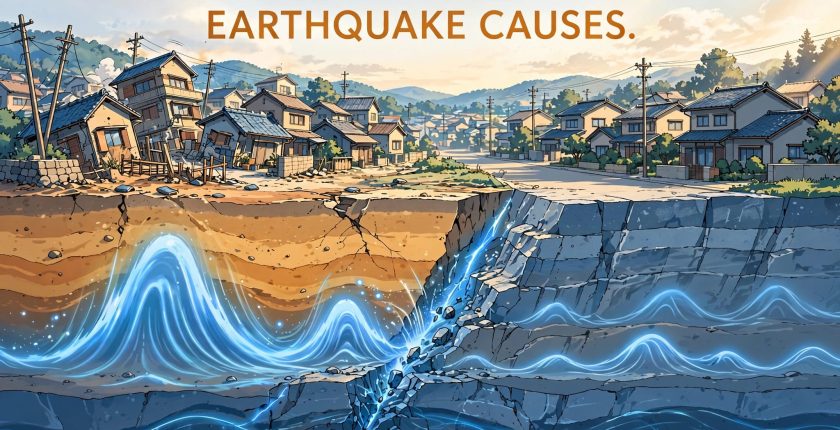
Two towns can experience the same earthquake and feel very different shaking. The main earthquake causes involve rocks suddenly slipping underground, but the effects depend on distance, depth and local ground conditions.
Most earthquakes begin when stored stress overcomes friction along a fault, a fracture where rocks can move past each other. Understanding that sequence explains both why earthquakes happen and why some places shake more.
Earthquake Causes Start With Moving Plates
Earth’s rigid outer layer includes its crust and the uppermost mantle. It’s divided into several large tectonic plates and many smaller ones.
According to the British Geological Survey’s explanation of what causes earthquakes, plates typically move a few centimetres per year. That sounds slow, but movement over decades can build enormous stress.
Why Plates Keep Moving
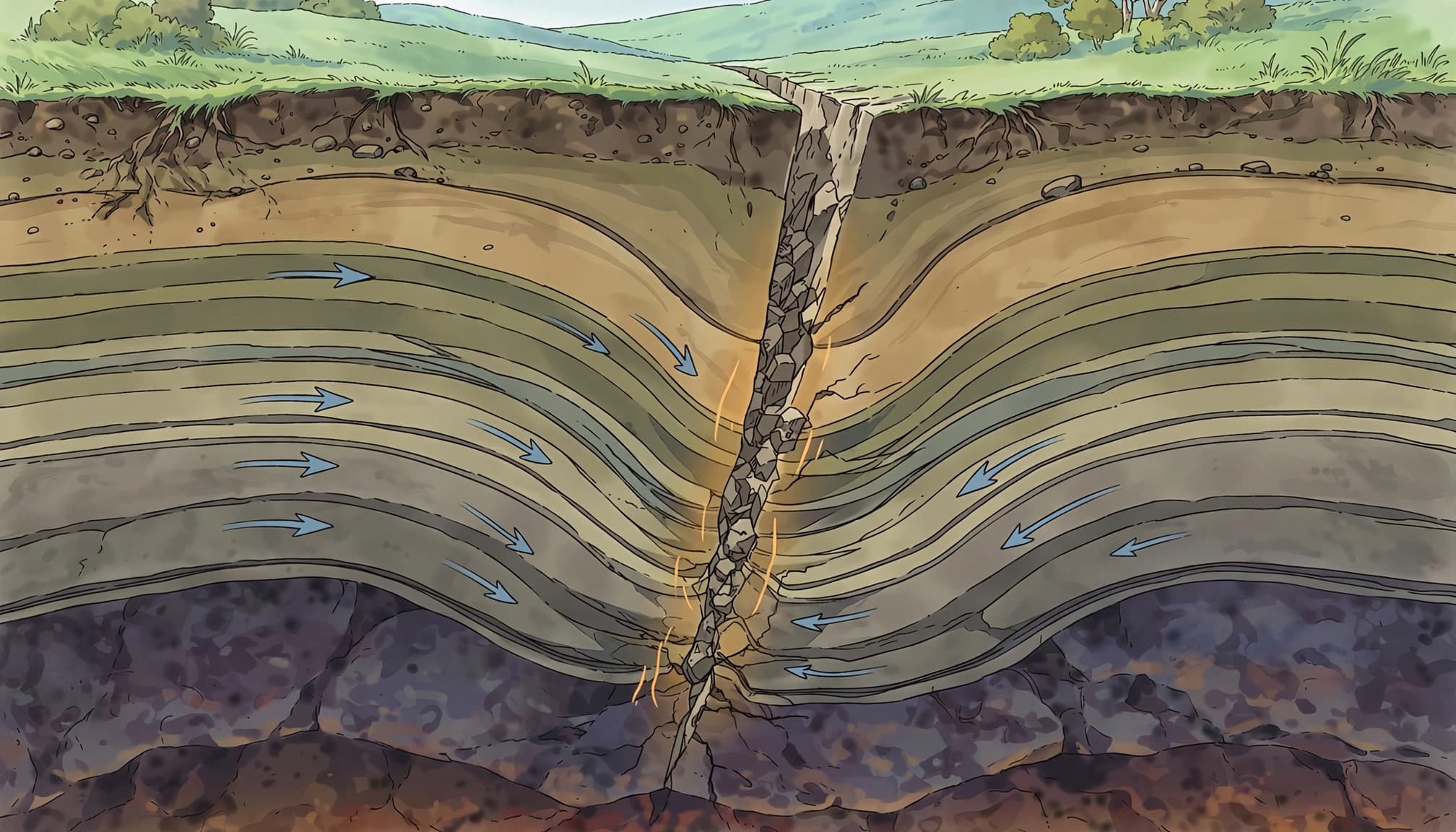
Three processes help move plates. Mantle convection transfers heat through the slow movement of mostly solid, deformable rock beneath them.
Ridge push occurs as plates move downhill away from elevated ocean ridges. Slab pull happens when a cold, dense plate sinks beneath another plate and pulls the rest behind it.
Research identifies slab pull as a major driving force. The balance between these forces differs between plates.
How Locked Faults Suddenly Slip
Friction can lock a fault while surrounding rock keeps deforming. Eventually, stress exceeds the fault’s resistance, and the rocks slip.
They spring toward a less strained shape, releasing energy as seismic waves that travel through Earth. This process is called elastic rebound.
Geologist Henry Fielding Reid developed the theory after studying the 1906 San Francisco earthquake. Britannica describes a 430-kilometre San Andreas rupture, where horizontal displacement reached as much as six metres.
Afterward, changes in stress can trigger nearby slips called aftershocks.
Three Plate Boundaries, Three Common Fault Motions
Most seismic activity occurs where plates meet, although their movement differs between boundaries.
This comparison connects each boundary type with its usual fault motion.
| Plate boundary | How plates move | Common fault type |
|---|---|---|
| Divergent | Move apart | Normal faults, where the block above an inclined fault moves downward |
| Convergent | Move together | Reverse faults, where the block above an inclined fault moves upward |
| Transform | Slide past each other | Strike-slip fault, with mainly horizontal movement |
These are common associations rather than rules for every individual fault.
At convergent boundaries, one plate may descend beneath another. This process, called subduction, produces Earth’s largest earthquakes when a broad section of the plate interface slips.
These megathrust earthquakes account for about 90% of global seismic moment. Seismic moment measures earthquake size using rock stiffness, the area that slips and the amount of movement.
Meanwhile, California’s San Andreas Fault is a well-known transform example. Plates slide sideways there rather than one sinking beneath the other.
Other Earthquake Causes: Volcanoes and Human Activity
Tectonic fault movement causes most earthquakes worldwide. However, magma movement and human activities can also disturb underground rock.
Magma Can Crack Surrounding Rock
Magma is molten rock beneath Earth’s surface. As it pushes through passages beneath a volcano, it changes pressure and fractures surrounding rock.
This can produce an earthquake swarm, many earthquakes clustered within a short period. Swarms sometimes warn of volcanic unrest, but they don’t guarantee an eruption.
Before Mount St. Helens erupted in 1980, magma and gas movement accompanied hundreds of earthquakes. The USGS account of its reawakening and initial activity describes that sequence.
Scientists interpret volcanic earthquakes alongside ground deformation and gas measurements. Together, these observations reveal more than earthquake counts alone.
People Can Change Underground Pressure
Underground mining, hydraulic fracturing, wastewater disposal and filling large reservoirs behind dams can induce earthquakes. They change rock stresses or fluid pressure around existing faults.
Hydraulic fracturing breaks rock to release oil or gas. Wastewater disposal instead injects unwanted fluids underground, sometimes for long periods.
Raised fluid pressure can reduce the friction holding a fault still. The USGS explains this mechanism in its account of human-caused earthquakes.
Many induced events are tiny or minor. However, some cause damaging shaking, so describing all human-induced earthquakes as harmless would be misleading.
Why Some Regions Have More Earthquakes
Earthquake activity follows the distribution of active faults and plate boundaries. It isn’t spread evenly across the planet.
Seismic hazard describes the likelihood and expected severity of shaking in a place. Seismic risk describes potential harm, which depends on how many people and buildings are exposed and how vulnerable they are. A hazard estimate doesn’t predict when an earthquake will happen.
Most Earthquakes Occur in Major Earthquake Belts
The Circum-Pacific Belt surrounds the Pacific Ocean, including Japan, New Zealand and the western Americas. About 90% of the world’s earthquakes occur in this broad zone. The Alpide Belt, extending from the Mediterranean region through parts of Asia, is the world’s next most seismically active belt, accounting for roughly 5–6% of earthquakes.
Worldwide, scientists estimate that about 500,000 earthquakes are detectable each year. Around 100,000 can be felt by people, and roughly 100 cause damage.
Plate Interiors Can Shake Too
Places far from plate edges usually experience fewer earthquakes, but they aren’t earthquake-free. Forces travelling through a plate can reactivate ancient faults.
The 1811 and 1812 New Madrid earthquakes in the central United States demonstrate this.
Because some faults lie buried beneath sediment, their surface traces can be difficult to identify. A quiet-looking landscape doesn’t prove that the rock below it is inactive.
Why the Same Earthquake Feels Different Nearby
Earthquake frequency and shaking strength are separate questions. A region can experience frequent small tremors, while another occasionally experiences a damaging event.
Magnitude Measures the Event, Intensity Measures Local Effects
Magnitude describes the size of the earthquake itself. Shaking intensity describes its effects at a particular location, including people’s observations and damage.
One earthquake therefore has a magnitude but many local intensity values. Different instruments and methods may produce slightly different magnitude estimates.
The USGS explanation of magnitude, energy and shaking intensity makes this distinction clear.
Each whole-number increase in magnitude releases about 32 times more energy, often rounded to 30. Consequently, a magnitude 7 earthquake releases roughly 1,000 times the energy of a magnitude 5.
That doesn’t mean every nearby building experiences 1,000 times more shaking.
Distance, Soil and Buildings Change the Effects
Shaking generally weakens with distance because waves spread out and lose energy. However, distance to the rupturing fault matters more than distance to one point on a map.
Soft sediments can amplify certain seismic waves compared with hard bedrock. Deep sediment-filled basins can also prolong shaking.
In addition, loose, water-saturated sediment may undergo liquefaction, temporarily losing strength during strong shaking.
Buildings respond differently because their height, design and construction affect how they vibrate. As a result, two neighbouring streets can experience different damage.
A magnitude describes the earthquake, but it can’t tell you exactly how strongly your street will shake.
Earthquake Depth Changes the Mechanism and Shaking
The focus, also called the hypocentre, is the underground point where rupture begins. The epicentre is the point directly above it on Earth’s surface.
They fall into three depth groups:
- Shallow earthquakes begin less than 70 kilometres below the surface.
- Intermediate earthquakes begin between 70 and 300 kilometres deep.
- Deep-focus earthquakes begin between 300 and about 700 kilometres deep.
Most everyday fault-slip explanations describe shallow earthquakes, which can begin in the crust or uppermost mantle. Because they start nearer the surface, they can produce intense local shaking.
Intermediate and deep earthquakes occur mainly within descending plates at subduction zones. Those slabs remain colder than the surrounding mantle.
At great depth, extreme pressure makes ordinary brittle faulting harder. Mineral changes and other processes within the sinking slab help explain these earthquakes, although scientists still debate the detailed mechanisms.
Deep events can be felt across wide areas. Their greater depth usually reduces the strongest surface shaking compared with similarly sized shallow events.
How Scientists Locate Earthquakes Without Predicting Them
Monitoring reveals where an earthquake started, how large it was, and whether aftershocks followed. Knowing those details afterward doesn’t mean scientists can predict the next event precisely.
P Waves and S Waves Reveal Distance
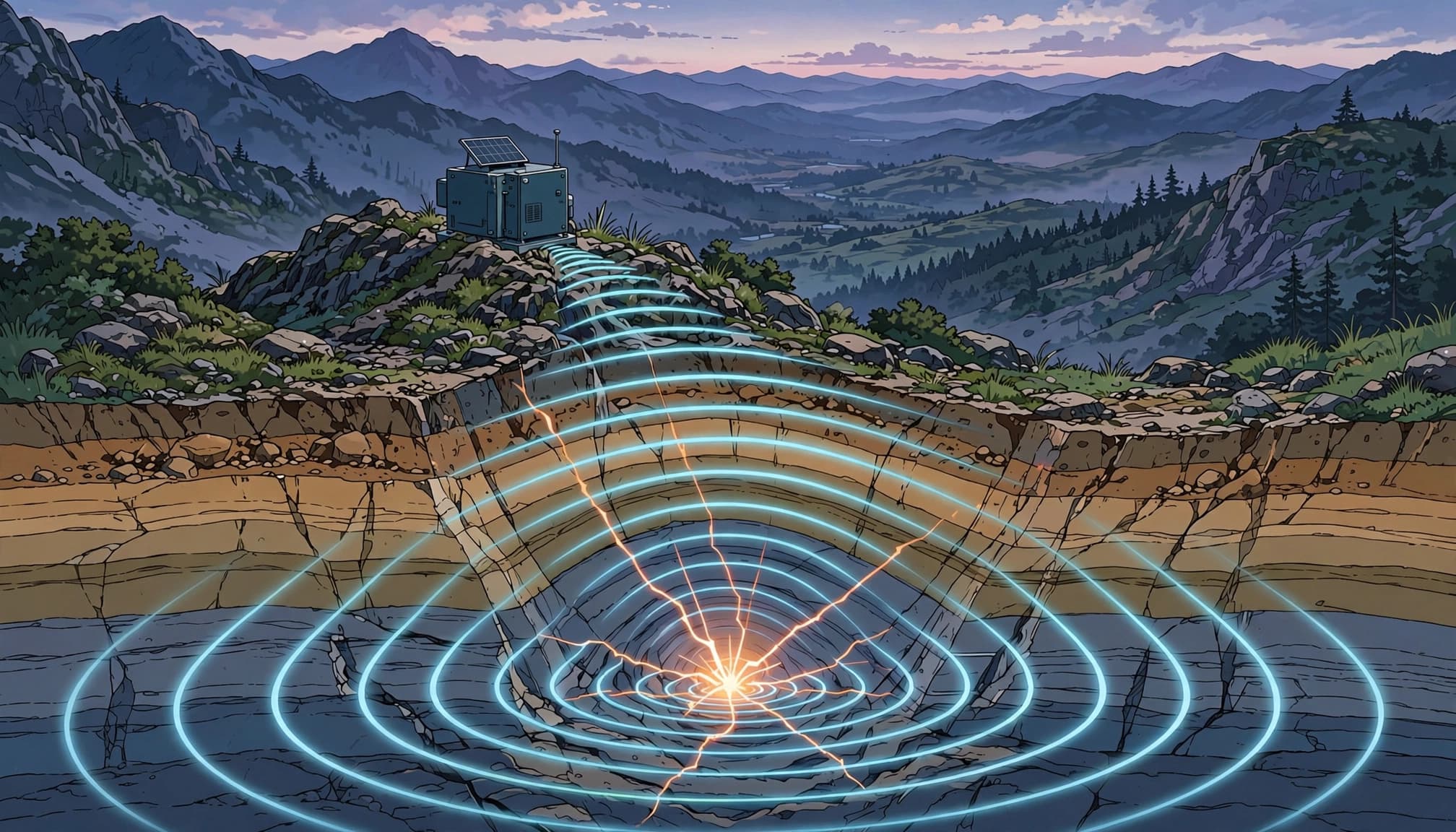
Seismographs record ground motion from seismic waves. Fast-moving primary waves, or P waves, compress and stretch rock along their direction of travel.
Slower secondary waves, or S waves, move rock sideways relative to their direction of travel. Because P waves arrive first, the gap between the two arrivals indicates distance.
A larger gap usually means the recording station is farther away.
Scientists combine distances from at least three stations to locate the epicentre using a method commonly called triangulation. Modern networks use many recordings and computer models to improve estimates of location and depth.
Forecasts and Early Warnings Have Limits
Scientists can estimate earthquake probabilities over years or decades using fault history and other measurements. However, they can’t reliably specify an earthquake’s exact time, location and magnitude.
The USGS states this directly in its guidance on whether earthquakes can be predicted.
Earthquake early warning works differently. It detects an earthquake that has already started, then sends alerts before stronger shaking reaches some locations.
That can provide seconds of warning. People close to the rupture may receive little or none because seismic waves reach them quickly.
Key Takeaways for Learners
Most earthquakes start when accumulated stress overcomes friction along a fault. Plate boundaries explain the main global patterns, while depth and local ground conditions help explain shaking.
Keep magnitude and intensity separate when studying earthquake reports. Also distinguish long-term forecasts from early warnings, which begin only after an earthquake starts.
The introductory physics course offers a foundation in physical principles through everyday objects.
Find your tutor here for one-to-one support with scientific concepts or exam preparation at your own pace.
Frequently Asked Questions
What causes most earthquakes?
Most earthquakes begin when stress along a fault overcomes friction and the rocks suddenly slip. The slip releases energy as seismic waves that travel through Earth.
Why can the same earthquake feel different in nearby places?
Shaking depends on distance from the rupturing fault, earthquake depth and local ground conditions. Soft sediment can amplify shaking, and buildings respond differently based on their design and construction.
What’s the difference between magnitude and shaking intensity?
Magnitude describes the size of the earthquake itself, while shaking intensity describes its effects at a particular location. One earthquake has a magnitude but can have many local intensity values.
Can scientists predict exactly when an earthquake will happen?
Scientists can estimate earthquake probabilities over years or decades, but they can’t reliably specify an event’s exact time, location and magnitude. Early warning detects an earthquake after it starts and can alert some locations before stronger shaking arrives.
Understanding Why Your Location Shakes
Two towns can feel the same event differently because seismic waves encounter different distances, rocks and soils. Building design then influences the damage.
The strongest takeaway is the distinction between earthquake size and local shaking. Understanding the cause explains how the event begins; understanding local conditions explains why its effects vary.
If you choose to purchase a product or service through one of these links, we may receive a commission at no additional cost to you. Any recommendations are provided for informational purposes only.