
Blog
Mathematics Exam Working: Show Steps That Earn Marks
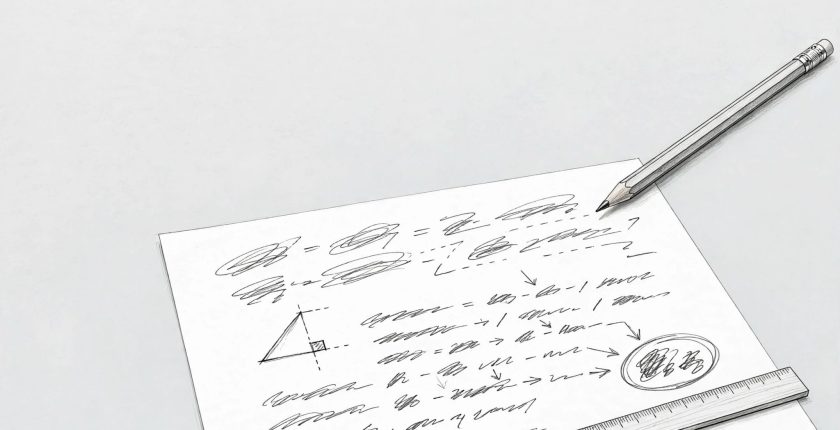
A wrong final answer doesn’t always mean losing every mark on a mathematics question. Clear mathematics exam working can earn method marks, provided your steps meet the marking criteria.
You don’t need to record every mental calculation, but you do need to show how your answer follows. The challenge is giving enough detail without wasting time.
Start by making each decision visible: the relationship you chose, the calculation you performed, and the conclusion you reached.
What method marks reward
Method marks recognise a valid approach. Accuracy marks recognise correct results, often following that approach. Some schemes also award independent marks for facts, statements, or answers.
For example, AQA’s GCSE mathematics mark scheme distinguishes method marks, labelled M, from accuracy marks, labelled A. However, the exact allocation depends on the question.
Writing a formula isn’t automatically enough. You may need to substitute the correct values or carry out a relevant operation.
Likewise, a correct answer alone won’t satisfy a question that explicitly requires a proof or a demonstrated method. Read the command before calculating.
The mark count helps you judge how much working to provide. A multi-mark problem usually needs several visible stages, although there’s no universal rule of one line per mark.
How to lay out mathematics exam working
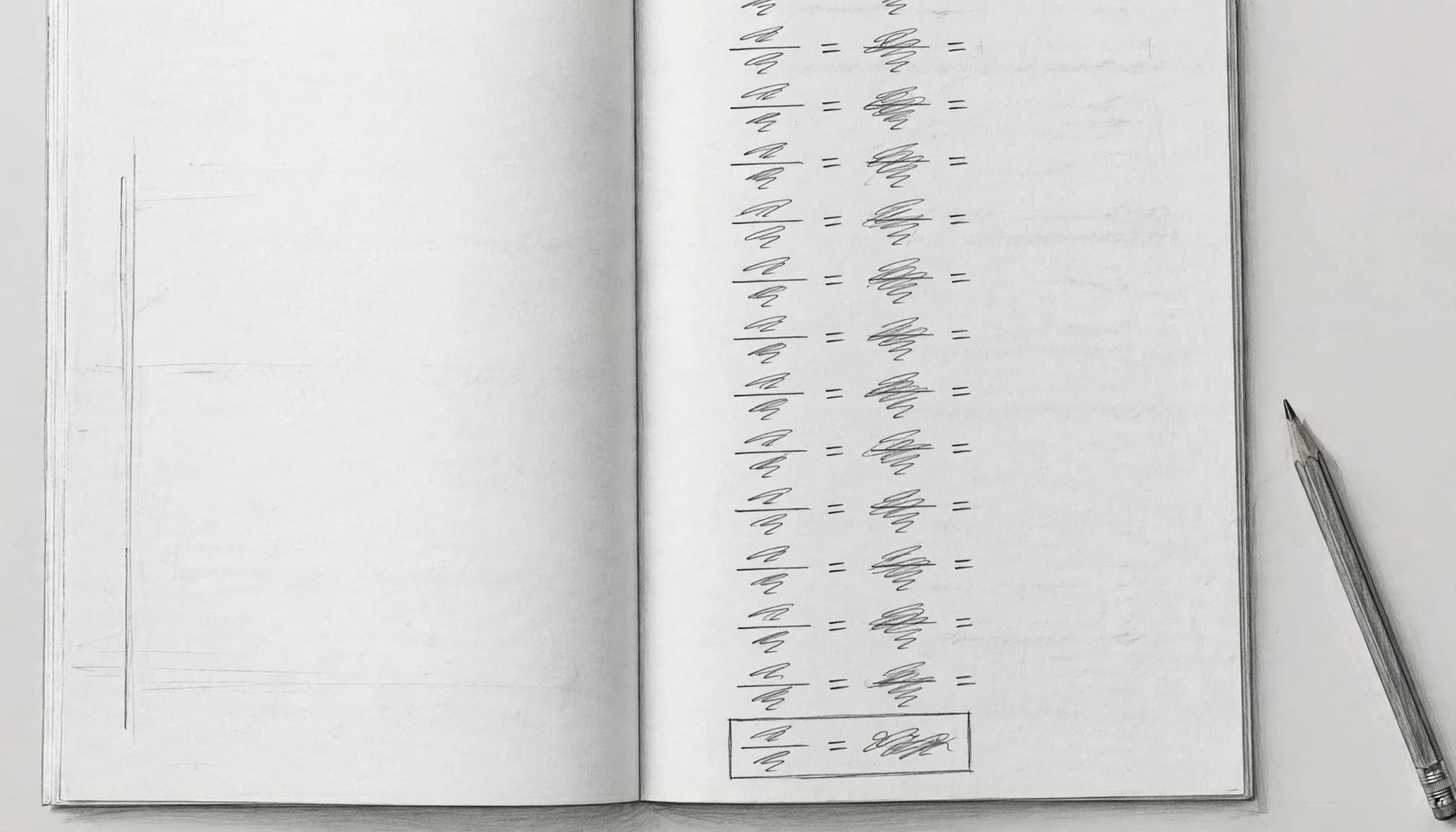
Give each meaningful change its own line
Write down the relevant equation or relationship first. Next, substitute the values, simplify, and state the answer.
Keep successive equations underneath one another. Aligning equals signs makes algebra easier to follow, especially when several operations are involved.
Show steps where mistakes commonly happen: opening brackets, combining fractions, changing signs, and rearranging formulas. However, you can usually calculate simple arithmetic directly.
Use words where symbols alone don’t explain your choice. A short phrase such as “using Pythagoras’ theorem” identifies the reasoning without turning your solution into an essay.
Keep corrections and final answers clear
Leave enough space between stages to insert a correction. If a line is wrong, cross it out clearly and continue nearby. Avoid overwriting digits until they become unreadable.
When you abandon an approach, indicate which working you want marked. Two conflicting solutions can make your intention unclear.
Keep your work within the permitted answer area. If you use additional paper, follow the exam’s instructions and identify the question.
Finally, place the answer where requested. Include units, required precision, and any restrictions on possible values.
Allocate time according to available marks
Use the paper’s duration and total marks to establish a pace. Then reserve time for checking and unfinished questions.
Spend a little time choosing the method before starting a long calculation. This can prevent several minutes of work on an unsuitable approach.
If you’re stuck, write a relevant relationship or a justified first step. Leave space and return later.
During practice, record how long larger questions take. Compare time spent with marks earned. This shows whether you’re struggling with recall, method selection, or unnecessarily long working.
Mark first, correct second, then retest
Choose past papers matching your course, level, calculator rules, and current specification. Use only permitted materials, and stop when the timer ends.
Mark the original attempt before adding corrections. For A-level practice, AQA’s Paper 1 mark scheme provides question-by-question criteria.
Review mathematics exam working line by line, rather than checking only final answers. Record whether each loss came from missing knowledge, choosing the wrong method, misreading, unclear presentation, or a careless slip.
Then solve a changed question after a gap. Copying the correction doesn’t demonstrate independent understanding.
If you are struggling with your exams, Find your tutor here for all the relevant subjects.
Frequently Asked Questions
How much working should I show in a mathematics exam?
Show the relationship you chose, the important substitutions or transformations, and your conclusion. You don’t need to record every mental calculation, but include enough for the method to be followed.
Can I earn marks if my final answer is wrong?
You may earn method marks for a valid approach, even if an error leads to the wrong answer. The exact credit depends on the question and its marking criteria.
Do calculator questions still need working?
Yes. Write down the relevant formula or relationship, show your substitution, and include units or rounding where required. This makes your method clear and helps you check the result.
Should I cross out incorrect working?
Cross it out clearly and continue with readable working nearby. If you try a different approach, make clear which solution you want marked.
Make your reasoning easy to follow
Clear written working gives the examiner a route through your solution. It also gives you a better chance of spotting errors before submitting the paper.
Practise showing meaningful steps, rather than filling space. Choose the method, make each change readable, and finish with the answer the question requested.
If you choose to purchase a product or service through one of these links, we may receive a commission at no additional cost to you. Any recommendations are provided for informational purposes only and do not affect the free nature of the courses.