
Blog
What to Do the Night Before an Exam
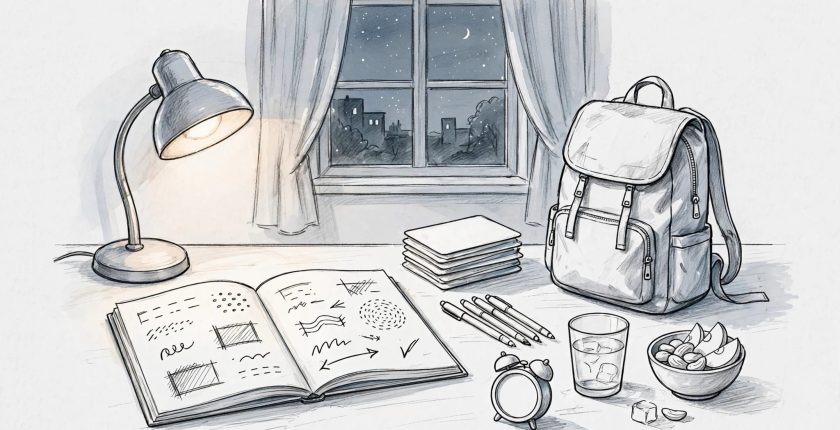
The night before an exam can feel more important than every study session that came before it. However, trying to learn an entire subject in a few anxious hours usually leaves you tired, scattered, and less able to recall what you already know.
A better evening before a final exam balances light review, practical preparation, food, movement, and sleep. Your job is to arrive with a clear head and fewer avoidable problems.
Key Takeaways
- Keep last minute revision short and active. Test yourself on familiar, high-priority material instead of reading every page again.
- Stop studying at a set time so your brain has time to settle before bed.
- Pack supplies, confirm the exam location or login details, and choose clothes before you feel tired.
- Eat a normal balanced meal, drink water, and avoid late caffeine or a heavy dinner.
- Protect sleep. The UNC Learning Center’s test anxiety guidance recommends 7 to 9 hours before an exam.
- If panic rises, use a short reset: breathe slowly, name the next action, and return to your plan.
How to Spend the Night Before an Exam Without Cramming
Targeted review can help when it is selective. It becomes harmful when you chase every gap in your notes and turn uncertainty into panic. These study tips focus on using limited time well, rather than covering everything.
Choose two or three areas that are most likely to matter: a formula set, key vocabulary, common essay evidence, or mistakes from a past paper. Give each area a clear finish line.
Use active recall, not passive rereading
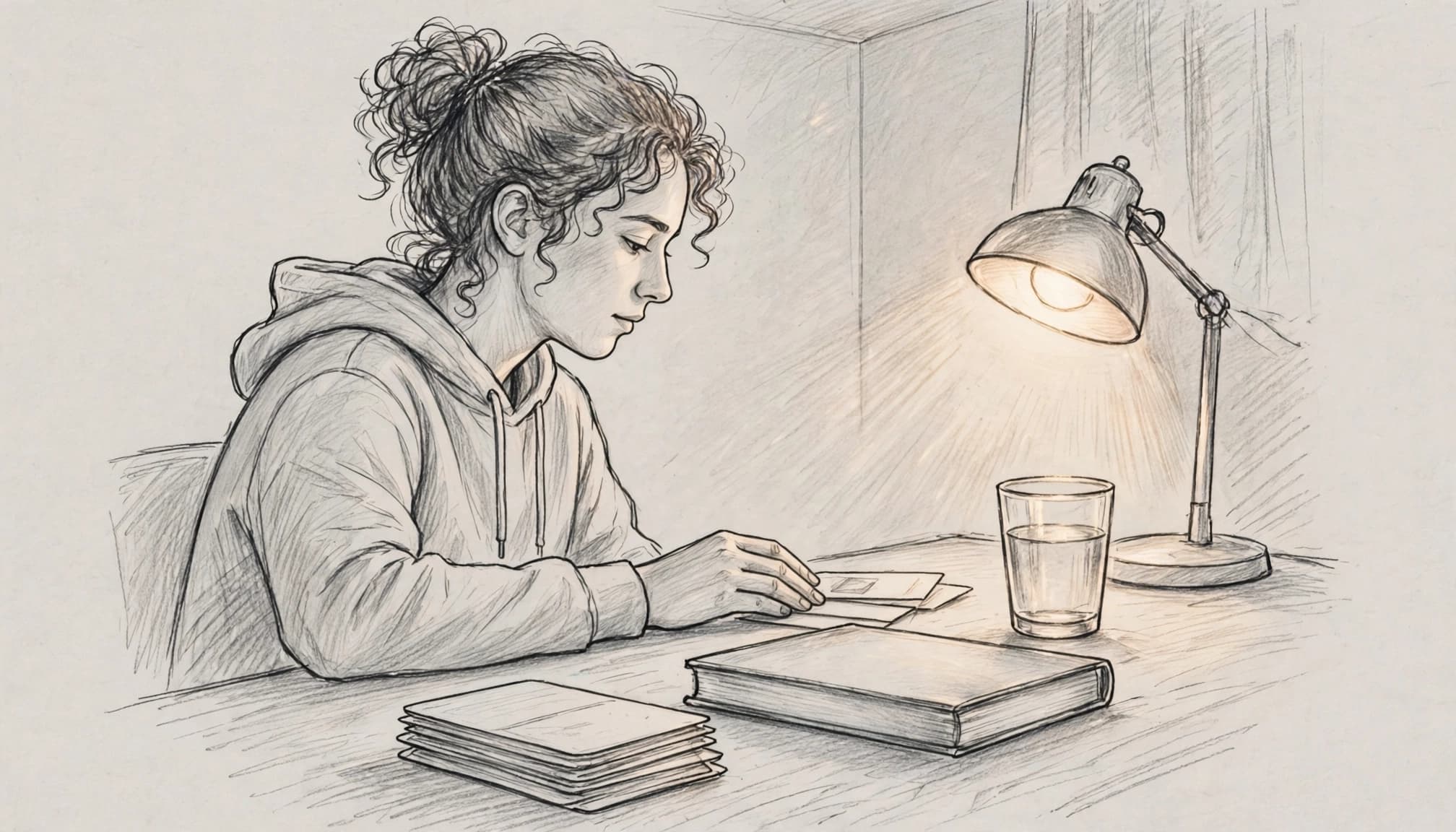
Close your notes and try to produce an answer first. Write a short explanation from memory, solve one representative problem, or answer five flashcards aloud.
Then check your work against a reliable source, marking guide, or teacher feedback. A wrong answer is useful because it shows what needs one final look. Producing an answer gives a more honest check of what you can retrieve from short term memory than rereading does. Retrieval practice is more effective studying than reading pages until they feel familiar.
Triage gaps instead of trying to fix everything
If you are underprepared, sort topics into three quick groups: secure, partly known, and unknown. Review the partly known material first because a brief reminder may bring it back quickly.
For the unknown group, learn only the essentials that could earn marks. In a history exam, that may mean one usable example per major theme. In math or science, it may mean identifying the method for common question types. Skip obscure details that would take an hour to understand.
A short session should end with a written list of what you know, not a longer list of things to fear.
A Simple Evening Routine Before Exam Day
Adjust the clock to fit your exam, commute, and usual bedtime. The point is to put studying behind you early enough that you can sleep.
| Time | Task | Purpose |
|---|---|---|
| 6:00 p.m. | Eat a normal dinner and drink water | Prevent hunger and low energy later |
| 6:45 p.m. | Complete 40 minutes of active recall | Refresh high-value knowledge |
| 7:25 p.m. | Take a 15-minute break away from screens | Let attention reset |
| 7:40 p.m. | Do 30 minutes of practice questions or flashcards | Check recall and correct errors |
| 8:15 p.m. | Pack materials and confirm logistics | Remove morning stress |
| 8:35 p.m. | Take a short walk, stretch, or shower | Release physical tension |
| 9:00 p.m. | Put study materials away and begin wind-down | Create a clear stopping point |
| Bedtime | Read, listen to calm audio, or use slow breathing | Make sleep more likely |
The routine works because it gives anxiety fewer open loops. You have reviewed, checked the practical details, and chosen when the work ends.
Set one firm stopping time
Pick a realistic cutoff, such as 9:00 or 9:30 p.m., and set an alarm labeled only with the time. When it goes off, close the books even if you feel tempted to keep going.
A late session often produces diminishing returns. The College of Western Idaho’s advice on test anxiety also cautions against staying up all night and cramming for hours, especially for students already struggling with stress.
Keep group-chat panic out of your evening
Class group chats can turn into a stream of rumored questions, competing study schedules, and messages from people who claim they have studied nothing. Mute notifications after you confirm any genuine logistics.
If you use your phone for a timer, turn on Do Not Disturb and place it across the room. Tools such as Focus mode, Forest, Freedom, or a basic app timer can block distracting apps until your planned study session ends. You do not need perfect self-control when you can remove the trigger.
Eat, Drink, and Move in Ways That Support Focus
A healthy diet doesn’t require a special “brain food” meal. Choose a familiar, balanced meal that leaves you comfortably full, not sluggish or hungry an hour later, without making dinner a heavy meal.
A simple plate might include eggs, beans, chicken, fish, tofu, or yogurt with carbohydrates such as rice, potatoes, pasta, or whole-grain bread. Add fruit or vegetables if you normally eat them. Keep water nearby through the evening.
Avoid caffeine late in the day
Coffee, energy drinks, strong tea, and some sodas can make a tired student feel more alert for a short time. They can also make it harder to sleep and increase the physical sensations of exam stress, such as a racing heart.
Avoid trying an unfamiliar supplement or energy product. If you want something warm during your wind-down, choose caffeine-free herbal tea, warm milk, or water. Alcohol is also a poor sleep strategy because it can disrupt sleep later in the night.
Use gentle movement to lower tension
A short period of gentle physical activity, such as a 10 to 20-minute walk or easy stretching, can break the loop of sitting, scrolling, and worrying. Keep the effort easy enough that you can still talk comfortably.
Save hard training sessions for another day if they leave you wired or sore. The goal is to loosen tense shoulders, change your surroundings, and return home ready to slow down.
Calm Exam Stress Before It Takes Over
Anxiety often makes ordinary uncertainty feel urgent. You cannot settle every doubt at 10:30 p.m., but you can reduce the pressure your body is carrying.
The University of Wisconsin-Milwaukee’s guidance on testing anxiety recommends an anxiety-reducing activity after you finish studying. Breathing, a short walk, or another calming activity can serve as practical relaxation techniques. Treat that time as part of getting ready, not as time you failed to spend revising.
Use a two-minute reset when panic spikes
Sit with both feet on the floor. Inhale gently for four counts, then exhale for six counts. Repeat this for two minutes, keeping the exhale longer than the inhale.
Next, write three plain statements: “The exam is tomorrow.” “I have prepared what I can tonight.” “My next task is sleep.” This is not about pretending the exam does not matter. It moves your attention from catastrophic thoughts to a task you can complete.
Use believable positive affirmations instead of vague reassurance
Positive affirmations work best when they sound believable. “I will get every answer right” can feel false when you are worried. Use calmer statements tied to your actions instead.
Try: “I can read each question carefully.” “I know more than I feel right now.” “If I get stuck, I can move on and return later.” These positive affirmations support mental focus because they describe choices available during the test.
Give Sleep a Real Chance
Quality sleep supports memory retention and normal brain function. An all-nighter may give you more time with your notes, but leave you less able to use what you studied.
Teenagers aged 13 to 18 generally need 8 to 10 hours of sleep, according to the American Academy of Sleep Medicine. Adults often need at least seven hours, and your usual healthy routine is a better target than trying to “catch up” in one night.
Make your bedroom easier to sleep in
Put your bag and clothes outside the bedroom if possible, so last-minute preparation doesn’t follow you into bed. Dim the lights, charge your phone away from the pillow, and keep the room comfortably cool. A simple wind-down routine gives you a better chance of good night sleep than reopening your notes late at night.
Avoid checking the time repeatedly. If you are awake for a while, leave the bed briefly and do a quiet, low-light activity such as reading a few pages of a familiar book. Return when you feel sleepier.
Do not grade your sleep during the night
One imperfect night doesn’t erase your preparation. Telling yourself, “I have to sleep now,” creates more pressure and keeps your mind active.
Resting with your eyes closed is still more useful than reopening your notes. Keep the morning plan simple, and trust the work you completed before the evening began.
Prepare Your Morning Before You Go to Bed
Small problems feel much bigger when you are rushing. Pack early enough that you can solve a missing-pencil problem without searching through drawers at midnight.
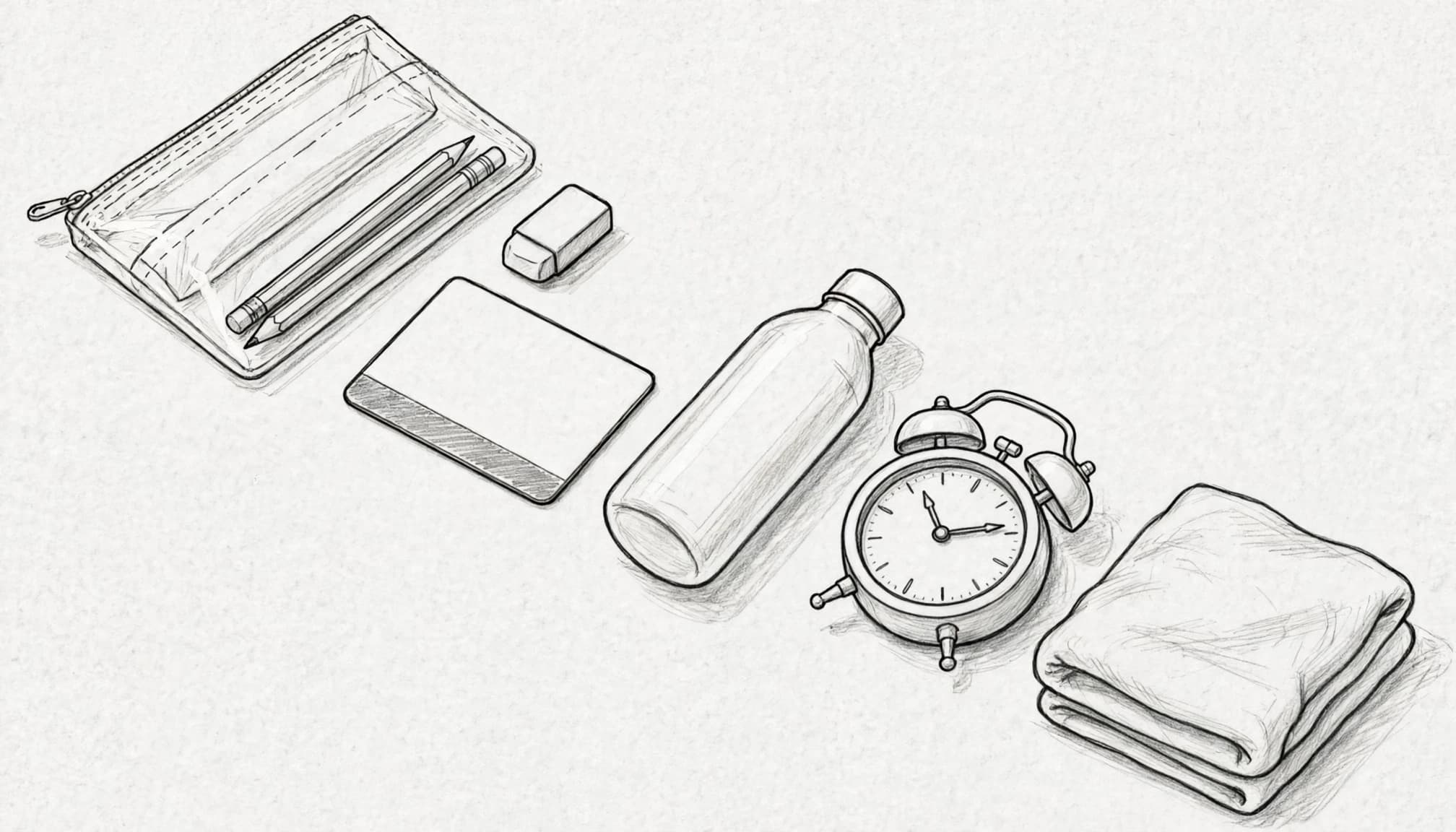
Use this brief checklist before you begin your wind-down:
- Put pens, pencils, an eraser, calculator, ruler, ID, and allowed materials in one bag.
- Confirm the exam time, room, transport plan, and required check-in time.
- If the exam is online, charge your device and test the login, browser, or required software.
- Lay out comfortable clothes and pack water or a familiar breakfast item if needed.
- Set two alarms, then place your phone where you must stand up to turn it off.
A packed bag is more than tidy exam preparation. It removes decisions when your attention should be on arriving calmly.
Frequently Asked Questions
Should I study the night before an exam?
Yes, but keep it light and targeted. Spend 30 to 90 minutes on active recall, common mistakes, and key ideas. Do not start a new unit or attempt to memorize every detail from scratch.
What if I have barely studied?
Focus on topics with the best chance of earning marks. Review the exam format, learn essential definitions or formulas, and answer a few representative questions. Then sleep. A rested mind can use partial knowledge better than an exhausted one.
What should I do if I cannot stop worrying?
Write down the worry and one action tied to it. For example, “I might forget my calculator” becomes “My calculator is in my bag.” If the worry has no action, use slow breathing, put your phone away, and return to your bedtime routine.
Finish the Evening With Less to Carry
The night before an exam is not a final test of your discipline. It is a chance to protect the knowledge you have built and arrive prepared for exam day.
Light review, practical planning, and enough sleep give you a steadier starting point than panic-driven cramming ever will.