
Blog
Exam Command Words Explained for Better Written Answers

A strong answer can lose marks when it tackles the wrong task. Exam command words tell you what kind of thinking and writing the marker expects, so spotting them early can change how you plan every paragraph.
You might know the topic well but still use command words suited to describing when the question requires judgement. Learning the distinction turns topic knowledge into answers that fit, including in higher education.
Start by reading the instruction word before reaching for facts, quotations, formulas, or examples. This article distinguishes defining, describing, explaining, analysing, evaluating, comparing, and discussing.
Key Takeaways
- Command words tell you the task, while the rest of the question sets the topic, scope, and evidence needed.
- Describe gives accurate features or facts. Explain adds reasons, mechanisms, or consequences.
- Analyse breaks material into parts and shows how those parts connect.
- Evaluate and assess require a supported judgement, not a list of points.
- Marks indicate the depth required, from direct coverage in short responses to developed reasoning in higher-mark answers.
- These skills support students in higher education. Check your board’s specification, sample papers, and official guidance before learning general definitions.
What Exam Command Words Tell a Marker
Exam command words are the instructions built into exam questions and assessment tasks. They signal the type of response required, not merely the topic you should revise. A question about climate change can demand a meaning, a process explanation, data analysis, or a judgement about policy.
The AQA guide to command words makes this distinction clear: the wording tells students how to answer. That means these instructions deserve the same attention as dates, case studies, equations, and quotations.
The command word sets the job
Read a question in two layers. First, identify the command words. Then focus on the content you must apply them to.
For example, “Explain two effects of inflation on households” requires causes or mechanisms for each effect. “Assess the effects of inflation on households” requires you to weigh their importance and reach a reasoned view.
A prompt to examine inflation data might ask you to suggest reasons for different effects. A useful margin note is one word, such as “reasons” for explain, “links” for analysis, or “judgement” for assess. This prevents a familiar topic from pulling you into an answer that does not match the task.
Board definitions can differ slightly
Most exam boards use similar language, but exact expectations can shift between subjects and qualifications. In science, “calculate” may require units and working. In English, “explore” may invite close analysis of language and structure. In history, “to what extent” calls for a judgement that considers competing factors. These differences can continue into higher education, where each subject may use familiar instructions in specific ways.
Cambridge International’s command-word guidance defines analyse as examining detail to show meaning and relationships between elements. Check your own course documents and command words guidance because the official meaning is the one your marker follows.
Decode the Question Before You Plan
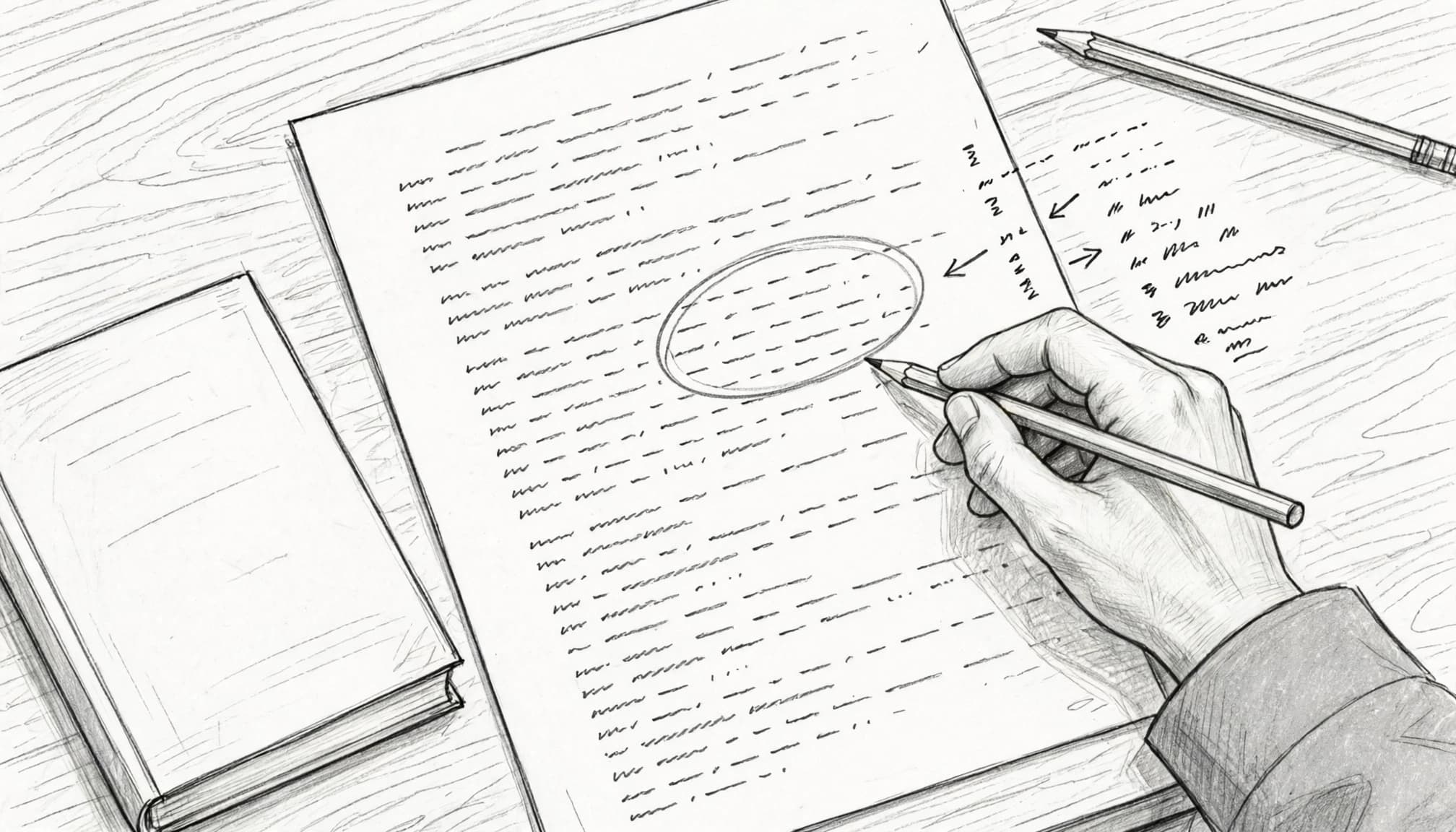
A few seconds of annotation can save several minutes of rewriting an unfocused answer. Underline the command words, identify the topic, and circle it before boxing limits such as dates, sources, case studies, or the number of examples requested. The same habit helps with longer written responses in higher education.
Separate the instruction from the content
Take this question: “Compare the impacts of two government policies on unemployment.” The instruction is compare. The content is two policies and their impact on unemployment.
Your plan should place each policy beside the other under shared categories. You might compare short-term impact, who benefits, cost, and limitations. Writing one full paragraph on Policy A and then one on Policy B often creates two descriptions, not a comparison.
A comparison needs connections between the two subjects throughout the answer, not two separate mini-essays.
Also watch for hidden second tasks. A question requiring clear causal reasoning and a judgement needs both parts. If you only complete one half, you leave marks behind.
Use the mark allocation as a depth guide
Marks don’t translate into an exact number of sentences, but they offer a reliable clue. A one-mark question may need a precise term, while a six-mark explain question needs several developed points. A question asking you to describe something may need clear features, not just a label. A 20-mark essay needs a line of argument, selected evidence, and a conclusion that answers the wording.
Before writing, divide your time across the paper. Then check the mark scheme to decide what the marker could credit in each answer. In a calculation, show enough working for method marks. In a longer essay, spend a minute forming a thesis and choosing your strongest evidence.
Practise with realistic essay prompts from past exam papers. This helps you annotate the question quickly and plan answers under timed conditions.
Different Response Levels: Compare and Contrast
These command words often appear close together, yet they ask for different levels of response. Use the right instruction and avoid adding material that does not earn marks.
To define a term is to give its precise meaning. To state something is to give it directly, without developing the point.
These instructions are not interchangeable
Describe means report what happened, what something looks like, or what the data shows. It stays close to observable features.
If a graph shows unemployment rising from 4% to 6%, you might report that unemployment increased by two percentage points. That is accurate, but it doesn’t tell the reader why it happened.
Explain adds the chain of reasoning. You might write that demand fell, firms sold fewer goods, and some employers reduced staff. Words such as “because,” “therefore,” and “which led to” make the link explicit.
For science questions, explain the process in order. For literature, interpret how a quotation supports an argument, especially in higher education writing. For history, connect one event to another rather than leaving the relationship implied.
Look beneath the surface
Analyse asks you to break information into meaningful parts, then show relationships, patterns, causes, effects, or significance. Examine also calls for close investigation, often with careful consideration of evidence.
A weak literature response says, “The writer uses a metaphor.” A stronger one identifies the metaphor, explains its connotations, and connects it to the character or theme. In higher education data work, analysis goes beyond reporting a trend. It considers anomalies, possible causes, and what the pattern suggests.
A reliable paragraph pattern is:
- Make a focused point.
- Select evidence or a detail.
- Explain how it supports the point.
- Link it back to the question.
Show similarities and differences
When two subjects are placed side by side, show how they are alike and different in connected sentences. Use comparative language throughout, including “similarly,” “whereas,” “both,” and “in contrast.”
For example, two characters may both seek power, yet one acts openly while the other manipulates others. This connected comparison is more useful than separate descriptions of each character.
Evaluate, Assess, Discuss, and Justify
These command words move beyond explaining information. They require you to make a case and show why your final view is reasonable.
Evaluation needs a supported judgement
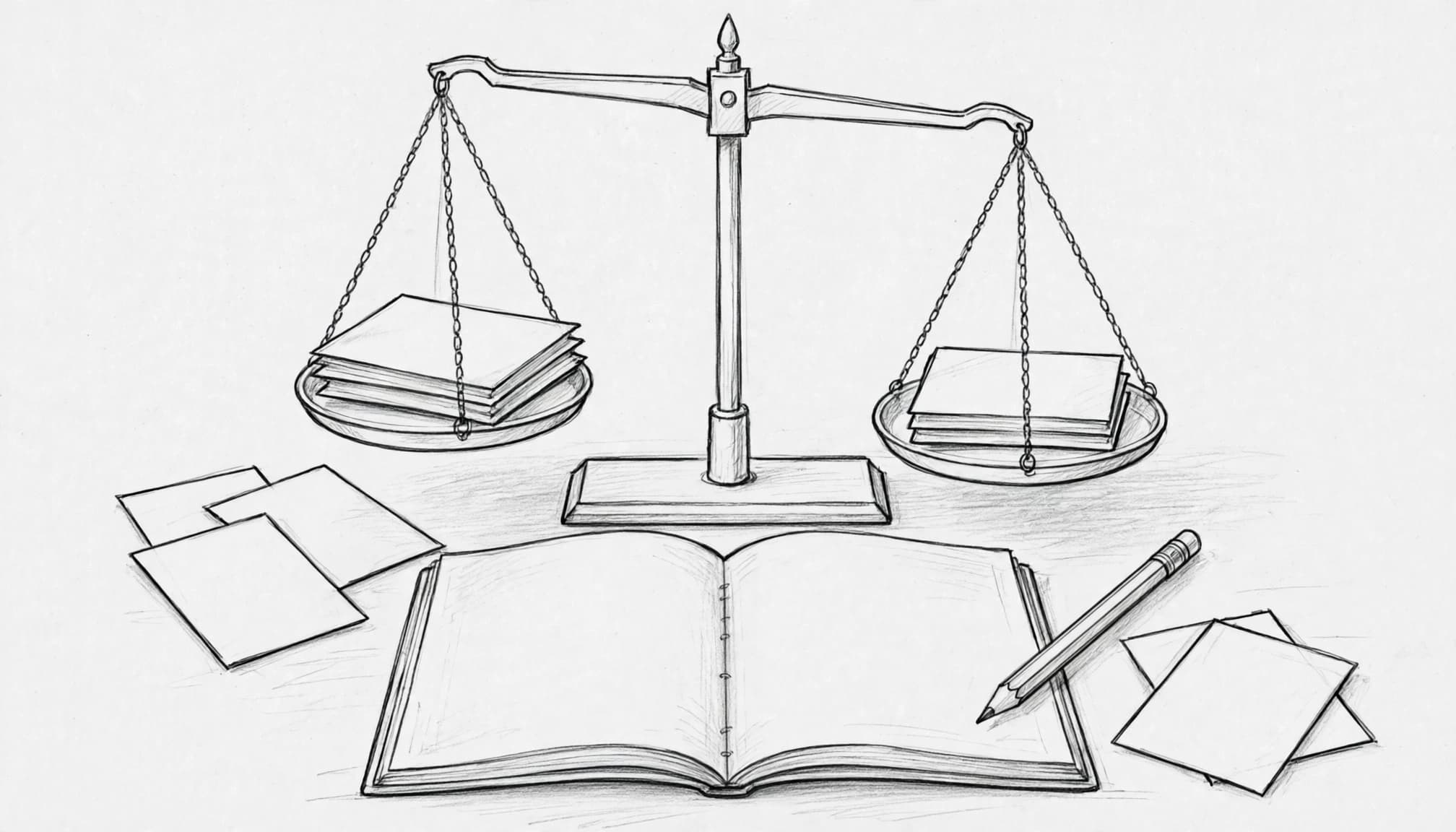
Evaluate means judge value, success, importance, or credibility using evidence. Assess often involves a similar informed judgement, but may place greater emphasis on weighing the relative importance of different factors.
A weak evaluation lists advantages and disadvantages without deciding which matters more. A stronger answer weighs them: “Although the policy reduced unemployment quickly, its high cost limits long-term value. Overall, it was effective as a short-term response.”
The AQA science command-word resource is a useful subject-specific reference. Technical subjects, and courses in higher education, may require particular evidence, calculations, or balanced chemical equations.
Discuss and justify build an argument
Discuss asks you to consider more than one view or factor. It needs development, not a rushed list. Organise the answer around clear points, give evidence, and show how the ideas relate before reaching a conclusion if the task warrants one.
Justify means give reasons or evidence for a choice, method, interpretation, or conclusion. In a biology question, state the treatment you choose and use the given data or scientific knowledge to defend it, rather than only explain how it works.
A simple test helps: after each claim, ask, “What proves this?” If the answer is vague, add evidence, a calculation, a quotation, or a clear explanation.
Build Written Answers That Match the Task
Good answers begin before the first sentence. A quick plan keeps your response proportionate, direct, and easier to follow under time pressure. Use command words as a guide, then adapt your approach to the subject and level, including higher education.
Use a response frame, then adapt it
Short questions reward precision. Long questions reward structure. Match your frame to the instruction rather than forcing every answer into the same paragraph model.
| Instruction | Useful response frame |
|---|---|
| Define | Give the precise meaning of a term. |
| Describe | Outline key features, trends, or stages accurately. |
| Explain | Identify a point, then show why or how it happens. |
| Break down | Outline the structure, use evidence, and show relationships. This follows the reasoning required by the analysis instruction. |
| Compare | Link similarities and differences in paired points. |
| Evaluate | Weigh evidence and reach a qualified conclusion. |
| Justify | State a decision and support it with reasons or data. |
The table is a starting point, not a script. Use subject vocabulary and address the exact material named in the question.
Make the conclusion answer the wording
For higher-mark questions, return to the instruction in your final paragraph. If the question asks “to what extent,” give the degree clearly. If it asks for the most important factor, name the factor you judge most important and explain why.
Avoid conclusions that introduce a fresh point. Instead, weigh the evidence already discussed. A brief, clear judgement is stronger than a dramatic final sentence with no support.
Practise Command Words Before Exam Day
You can understand every definition and still freeze if you haven’t practised producing answers. Use exam papers from your exact course, board, or teacher whenever possible.
Train under realistic conditions
Sit at a clear desk, set a timer, and answer without notes. Underline the command words before you begin. For essay prompts, plan a thesis, evidence, and reasoning. For maths and science, show every calculation step and explain processes without relying on a word bank.
This is also useful exam technique. Afterwards, use an official answer key, mark scheme, rubric, or teacher feedback. Don’t only count marks. Check whether you answered the instruction. A detailed response can still miss the task.
Keep a mistake log with the question, identify the error, and record the correction. Entries such as “forgot a definition,” “failed to describe the evidence,” and “ran out of time” each need different practice.
Help command words stick through retrieval
Make flashcards that require an answer, not recognition. One side might ask, “How do you make a supported judgement?” The other should prompt you to weigh evidence, consider limits, and reach a supported conclusion.
Another card might ask you to summarise a concept in a short definition or overview. Then write short answers from memory. A history student can compare two policies. A chemistry student can show why an equilibrium shifts. An English student can study closely how a quotation shapes a reader’s view.
Teachers and tutors can build this practice into normal revision without losing course time. Change the instruction on an existing question, then ask students how their response must change. A definition prompt can become an explanation prompt, followed by a short judgement. The content stays familiar while the thinking becomes more flexible, which helps students preparing for higher education.
Frequently Asked Questions
Why do students confuse command words in high-stakes exams?
Pressure makes familiar knowledge feel more urgent than careful reading. Students may start writing as soon as they recognise the topic, especially when time is short. However, highlighting the command words gives the brain a simple first task and creates a pause before an answer takes shape.
Modern students do not automatically struggle more than earlier generations. The challenge is common whenever learners meet unfamiliar question wording, limited time, and dense course content at once.
How should I revise for “to what extent” questions?
Practise making a judgement before writing your full answer. When you discuss an issue, weigh more than one view before reaching a conclusion. Choose a position, list the strongest evidence against it, then decide whether that evidence changes your view. Your final answer should show degree, using language such as “largely,” “partly,” or “only to a limited extent.”
Use past-paper questions and compare your work with the mark scheme. The AQA business command-word examples also show how command terms work in context.
Do these skills matter in higher education?
Yes. Higher education uses varied question wording, so reading the instruction carefully helps you plan focused answers and meet each task’s expectations.
Write for the Instruction, Not the Topic
The best written answers do more than display what you know. They show the marker that you understood the precise task, selected relevant evidence, and used it for the right purpose.
Before every answer, pause to state the instruction and required judgement, then consider the scope and marks available. That habit makes exam command words a practical guide for accurate, relevant writing, with evidence and structure suited to the task, including longer answers in higher education.