
Blog
How to Use Examiner Reports to Stop Repeating Exam Mistakes
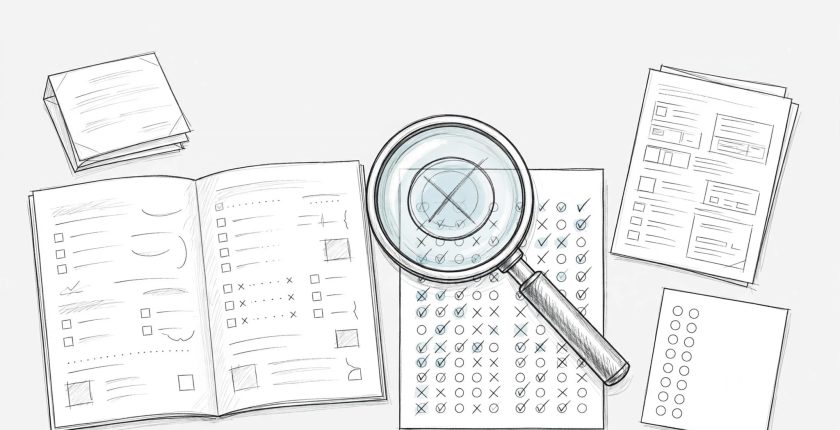
You finish another practice paper, check the answers, and find you’ve lost marks for the same reason again. Examiner reports can help you spot that pattern, but reading one on its own won’t fix it. You need to connect the examiner’s comments to your own answers, then test a better approach on a fresh question.
The process starts with the correct report, question paper, mark scheme, and syllabus. Together, they show what went wrong and what to practise next.
What a report can tell you
After an exam series, a board may publish a report describing how candidates handled particular questions. It can identify common misunderstandings, weak explanations, missed instructions, and features of stronger responses.
Those comments describe a group of candidates, not your individual script. If a report says students struggled with a graph, that warning matters most when your own answer shows the same problem. Conversely, your weakest topic might receive little attention because other students answered it well.
Treat the report as a source of possible causes. Your marked work tells you whether each cause applies. Then use the mark scheme to check what the question rewarded.
Find reports that match your exam
A report is useful only when it belongs to the paper you attempted. Match the awarding body, qualification, subject, paper number, and exam series before reading its comments.
Keep the paper and marking materials together
AQA’s past papers and mark schemes finder includes examiner reports alongside question papers and mark schemes. Download the matching files into one folder, named by subject, series, and paper. Keep the current specification or syllabus nearby too.
Check whether an older report still applies
Older papers can provide extra practice, but course content and assessment formats can change. Check the relevant syllabus before treating an old comment as current advice. If a topic or question type has changed, use the report to practise a transferable skill, such as interpreting data, rather than to predict current papers.
Access also varies by board and date. AQA’s assessment-materials guidance explains when its papers, mark schemes, and reports are available.
Read the report with your own answer beside it
Don’t start by highlighting every sentence that sounds important. Choose two or three questions where you lost marks, find those questions in the report, and put your answer next to the mark scheme.
Separate observations from instructions
A report might say that many candidates described a result without explaining it. That’s an observation. Your instruction is more precise: find where your answer stopped at description, then practise writing the missing link.
The Cambridge International AS & A Level Business 9609 materials bring past papers, mark schemes, and examiner reports together. Reading those materials side by side lets you check a comment against the exact question rather than treating it as general revision advice.
Look for comments that recur
Note warnings that appear across several questions or reports: unsupported judgements, answers that ignore the context, incomplete working, or imprecise terms. A repeated warning deserves more attention than a single unusual question.
Still, don’t assume the most common class-wide mistake is yours. Mark the report’s comment only when you can point to evidence in your own work, such as a missing unit or a paragraph with no supporting reason.
Diagnose why you keep losing marks
Two wrong answers can need completely different repairs. Before revising the topic again, identify what happened between reading the question and writing your response.
| Possible cause | What to look for in your answer | Better next practice |
|---|---|---|
| Knowledge gap | You couldn’t recall a required fact, formula, or process. | Learn it, then retrieve it without notes. |
| Command-word error | You described when asked to explain or judged without weighing evidence. | Mark the instruction and practise that response type. |
| Application error | You knew the idea but didn’t use the data, source, or context supplied. | Answer a new question using its given material. |
| Technique or precision error | Your method, reasoning, terminology, units, or final conclusion wasn’t clear enough for credit. | Rewrite the missing step, then try a similar question. |
| Timing error | You left marks blank or rushed after spending too long elsewhere. | Practise allocating time across a timed set. |
Check the report against the mark scheme and syllabus
Examiner comments describe performance. The mark scheme shows where credit was available, while the syllabus identifies the knowledge and skills the course requires. Use all three before deciding what to revise.
Identify the missing credit
Compare your answer with the scheme one mark or criterion at a time. For a calculation, check method, substitution, final value, and units where relevant. For an extended response, look for the evidence, explanation, or judgement required by the criteria.
Don’t copy a model response and call the problem solved. Work out which feature your answer lacked. If your explanation gave a fact but never connected it to the question, that connection is the skill to practise.
Confirm what your course expects
This check matters when general advice conflicts with a particular exam. An instruction to “add more detail” is too vague; the syllabus and scheme help you decide whether you need better terminology, closer analysis, or a more developed conclusion.
Turn the comment into targeted practice
Reading feedback can make a correction feel familiar before you can produce it independently. Close the report and attempt a fresh question that tests the same skill.
Make one repair at a time
If you missed a definition, recall it without notes and apply it in a short answer. If your evaluation lacked a judgement, plan a response that weighs evidence before writing it. For a maths method error, solve a similar problem and show each meaningful step.
For a recurring weak area, gather a small set of topical questions. Attempt them without the scheme in view, mark them afterward, and compare the errors. Once the skill holds up, mix it with other topics.
Retest after a gap
Redoing the original answer immediately checks whether you understood the correction. A different question a day or two later checks whether you can use it. Try another the following week if the mistake has persisted.
Eventually, put the skill back into a timed paper. This reveals whether the fix survives normal exam pressure. Pearson’s past-paper search offers papers and mark schemes for this kind of practice, though access to recent papers can be restricted.
Keep an error log you will use
Record recurring mistakes in a notebook or spreadsheet, rather than copying whole paragraphs from reports. A useful entry contains the paper and question, the marks lost, the likely cause, one repair action, and a date to retry the skill.
For example, an entry might read: “Rushed final explanation; missed the link between evidence and conclusion; practise two timed explanation questions on Thursday.” That tells you what to do. “Revise explanations” doesn’t.
If you are struggling with your exams, Find your tutor here for individual support.
Key Takeaways
- Match each examiner report to the correct paper, mark scheme, and current syllabus.
- Check report warnings against your own answers before deciding whether you have a knowledge, instruction, technique, precision, or timing problem.
- Turn each recurring mistake into a small repair task, then test it with a fresh question after a gap.
FAQs about using examiner reports
Should I read the report before attempting a past paper?
Attempt the paper first, without notes or feedback. Read it after marking, when you can compare its comments with what you wrote.
What if my answer differs from the examples in the mark scheme?
Check whether the scheme allows other valid approaches or wording. Credit depends on meeting its criteria, not copying an example exactly. If a longer response remains difficult to judge, ask a teacher to review the specific answer.
If you choose to purchase a product or service through one of these links, we may receive a commission at no additional cost to you. Any recommendations are provided for informational purposes only.